Civil Construction Carpenter Job Description Template

ChiselJobs Team
Published on 4/24/2026
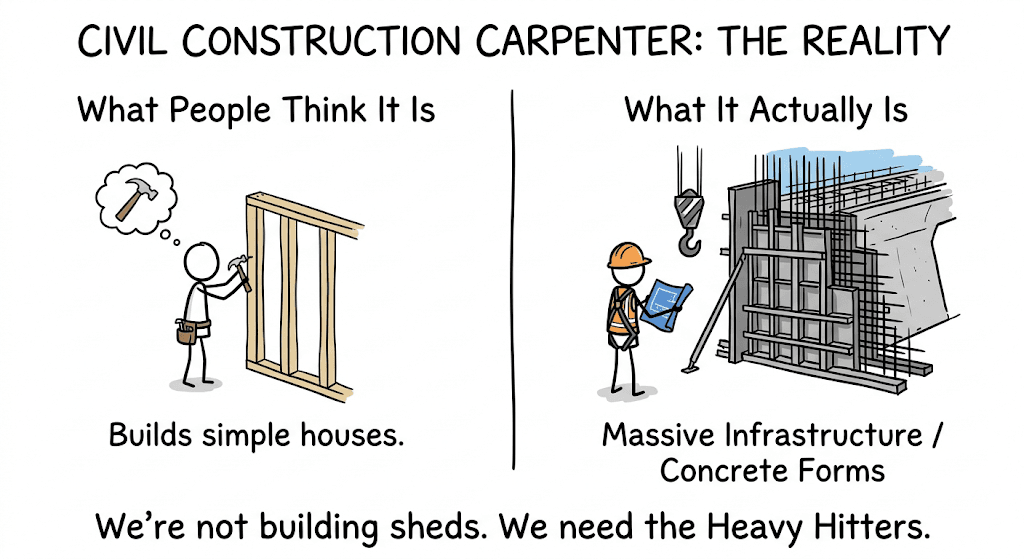
If you are reading this, you know that a civil construction carpenter is a completely different animal compared to a residential finish guy. We are talking about the men and women who build the bones of our modern infrastructure. Bridges, dams, transit systems, and massive concrete water treatment plants simply do not get built without top-tier formwork and rigging skills.
Understanding the Heavy Construction Environment
Before you post a job listing, you must understand what these crews actually do on a daily basis. Civil carpentry is heavily focused on concrete formwork and temporary structures. These carpenters build the complex molds that hold thousands of tons of wet concrete. Precision is absolutely critical because a blowout on a thirty-foot retaining wall is a catastrophic failure. Employers need hands who understand lateral pressure, proper tie spacing, and heavy rigging techniques.
These job sites are rough. They are out in the mud, exposed to all weather conditions, and surrounded by heavy equipment. Your job description needs to reflect this reality to attract people who thrive in this demanding environment.
The Ultimate Civil Carpenter Job Description Template
Feel free to copy and paste this directly into your next job listing on ChiselJobs. You will just need to tweak the local details and specific project requirements.
Job Summary Overview
We are seeking a highly skilled and safety-focused Civil Construction Carpenter to join our heavy infrastructure team. In this role, you will be responsible for erecting heavy timber, falsework, scaffolding, and engineered formwork for large-scale public works projects. You will work alongside ironworkers and operators to ensure concrete pours are executed perfectly.
Core Responsibilities on the Job Site
Read and interpret complex heavy civil blueprints and structural drawings.
Build, assemble, and dismantle heavy concrete forms including gang forms, slip forms, and custom timber molds.
Ensure strict compliance with all OSHA concrete and masonry regulations to prevent formwork failure.
Safely rig heavy materials and form panels for crane hoisting and placement.
Construct complex falsework, shoring systems, and scaffolding according to ANSI safety guidelines.
Shoot grades and establish elevations using advanced laser levels and transit equipment.
Coordinate with concrete crews during massive continuous pours to monitor form integrity.
Essential Tools and Skills Required
Expertise with heavy construction layout tools.
Mastery of standard rough carpentry tools including heavy-duty circular saws, framing hammers, plumb bobs, and high-torque impact drivers.
A deep, practical understanding of structural loads and concrete weight displacement.
Ability to work at significant heights and in confined trench spaces.
Education, Certifications, and Training Requirements
Completion of a recognized heavy carpentry apprenticeship program through Apprenticeship.gov or a minimum of four years of equivalent heavy civil experience.
Current OSHA 30 Construction safety certification is mandatory.
Familiarity with industry-standard training protocols, such as those outlined by the NCCER construction standards.
Valid specialized rigging and signaling certifications are highly preferred.
Navigating Compensation and Regional Demand
Let us talk frankly about money and location. A civil carpenter in New York working on a subway expansion is going to see a very different paycheck than a crew framing out highway overpasses in rural Texas. When you write your job post, you need to be highly transparent about the pay scale. Do not leave the salary section blank.
Many of these heavy highway and bridge jobs fall under federal or state funding umbrellas. That means you are dealing with prevailing wage laws. If you are unfamiliar with how this works, you must check out the Department of Labor Davis-Bacon Act guidelines to ensure your compensation packages are strictly compliant. According to the Bureau of Labor Statistics, the top earners in this specific field are heavily concentrated in regions experiencing massive infrastructure booms, such as California, New York, and Illinois.
Standing Out in a Highly Competitive Labor Market
Top-tier civil carpenters have a lot of options right now. If you want the best tradespeople clicking the apply button on ChiselJobs, you need to offer significantly more than just a standard paycheck. Highlight your company safety record. Mention in your post that your site follows the strict health protocols outlined by the National Institute for Occupational Safety and Health. A safe site is a highly productive site, and veteran carpenters know to look for employers who take trench safety and fall protection seriously. You can review the latest CDC fall prevention resources to keep your job posting safety language completely up to date.
Furthermore, talk about the engineering and the gear. Are you using the latest, safest formwork systems approved by the American Concrete Institute? Carpenters respect companies that invest heavily in good equipment. Let them know they will not be fighting with warped wood and broken gang forms every single morning.
Defining Career Trajectory and Professional Growth
Finally, use your job description to clearly outline the path upward. Civil infrastructure projects often take several years to complete. A reliable hand wants to know they can move up the ranks to foreman, superintendent, or safety director. Talk about opportunities for advanced technical training. Mention potential cross-training on heavy civil equipment or advanced surveying tools used by major Federal Highway Administration contractors. If a skilled carpenter sees a long-term future with your firm, they are much more likely to stick around until the final yard of concrete is poured and cured.