How to Find Union Carpenter Jobs

ChiselJobs Team
Published on 2/17/2026
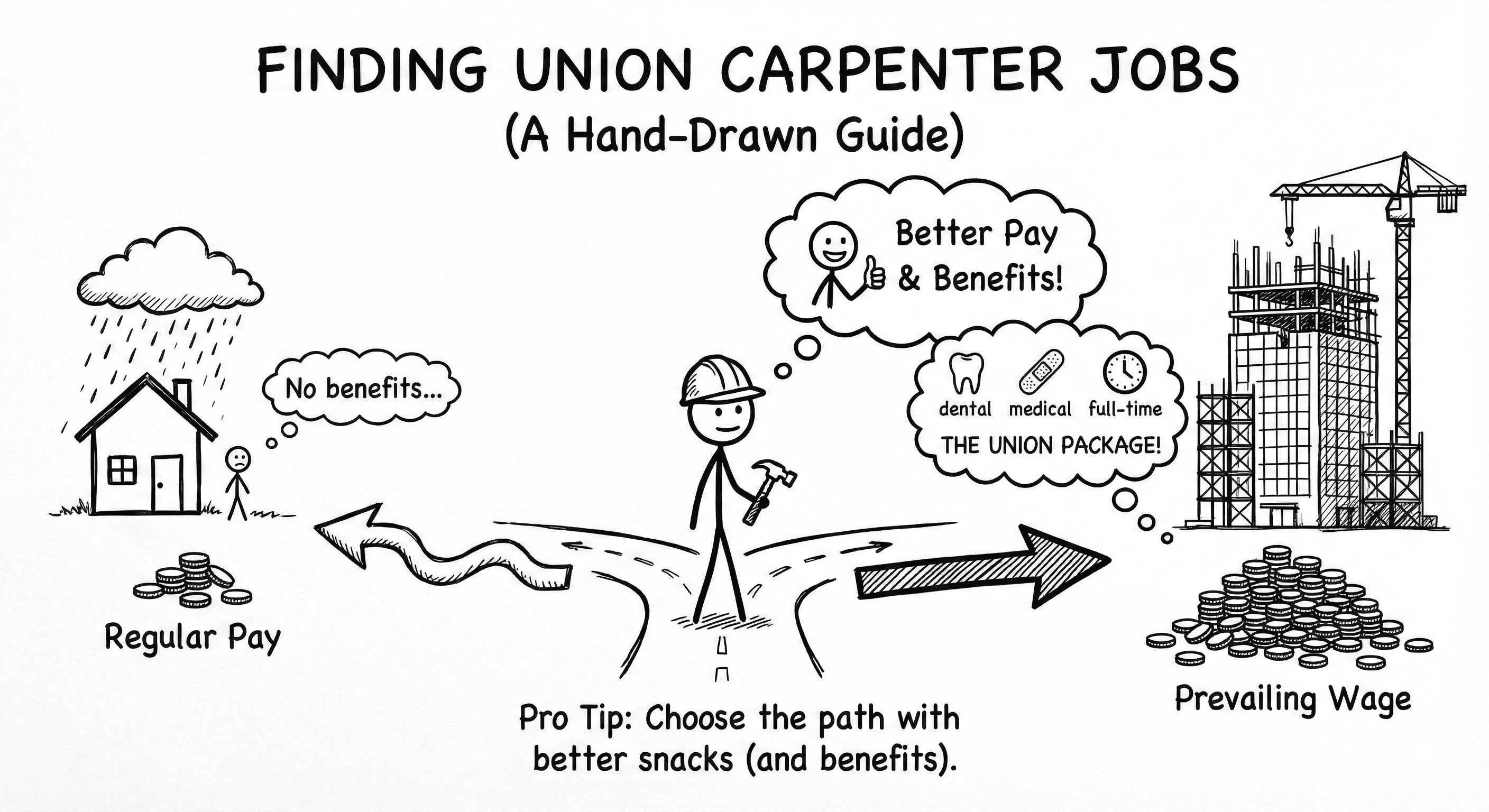
Stepping into the commercial construction sector often means entering the world of organized labor and massive public works. If you are actively searching for union carpenter jobs, you need a solid grasp of how this specific job market operates. The landscape of prevailing wage projects is vastly different from residential framing or custom home remodeling. This guide breaks down the process of securing these roles, understanding your negotiated compensation, and handling the strict technical requirements of the modern commercial job site.
Deciphering the Davis-Bacon Act and Local Wage Rates
Before you submit your name for any large government funded project, you need accurate pay information. In the United States, a federal law known as the Davis-Bacon Act dictates that contractors bidding on federal public works must pay their mechanics and laborers a local prevailing wage. This rate is not a basic minimum wage. It is a carefully surveyed compensation package consisting of a strict base hourly rate plus mandatory fringe benefits.
Contractors and estimators frequently rely on government databases like the SAM.gov wage determinations portal to identify the exact pay scale for specific trades in their county. If your task involves building heavy concrete formwork or erecting load-bearing steel stud walls, your hourly rate is highly regulated to match the established local standard. You can explore the Department of Labor Worker.gov portal for detailed breakdowns of how these wage rules protect local living standards and prevent outside companies from undercutting skilled tradespeople.
The Financial Impact of Organized Labor on Commercial Sites
Aligning yourself with organizations like the United Brotherhood of Carpenters offers tremendous long-term financial stability. When you secure full-time employment on a prevailing wage or union site, your compensation package extends far beyond the weekly cash you take home.
Union collective bargaining agreements guarantee comprehensive health packages. These packages include medical, dental coverage, and vision care, which are typically funded entirely by employer contributions. This setup keeps out-of-pocket healthcare costs to an absolute minimum for you and your family. Furthermore, these contracts include robust pension plans and dedicated annuity funds. Whether you are installing intricate interior finish carpentry or assembling massive commercial roof trusses, your logged hours build a highly secure retirement. Advocacy groups like North America's Building Trades Unions actively negotiate to maintain these high compensation standards across the continent.
Matching Your Trade Experience to Commercial Site Demands
Commercial construction demands extreme precision, rapid production speeds, and strict adherence to commercial building codes. Before you visit your local union hall, take an honest inventory of your tool mastery and find out how your skills align with the job description for heavy commercial work.
A full job description for a union journey-level carpenter will list highly specific technical expectations that go beyond basic wood framing. The daily realities of a prevailing wage job site involve:
Advanced Blueprint Reading: Visualizing complex structural engineering requirements from detailed architectural plans.
Precision Site Layout: Operating transit levels and laser lines to establish perfectly square, level, and plumb foundations before pouring concrete.
Heavy Material Handling: Working efficiently with heavy-gauge steel framing studs, engineered timber beams, and reinforced wall panels.
Advanced Tool Mastery: Utilizing heavy-duty rotary hammers for concrete anchors, powder-actuated fastening tools for steel tracks, and high-capacity pneumatic nail guns on a daily basis.
If your background is strictly residential deck building or installing baseboards using basic hand tools like wooden mallets and speed squares, you will likely need to enter a formal training program. Apprenticeships offer a structured pathway to upgrade your skills while earning a steady paycheck. These programs combine classroom theory with thousands of hours of paid on-the-job training. In the United States, you can locate certified programs through Apprenticeship.gov. In Canada, tradespeople work toward achieving their interprovincial standard through the Red Seal Program, which is the absolute gold standard for recognizing trade competency across all provinces.
Mandatory Safety Protocols and Certifications
Heavy commercial sites enforce strict, zero-tolerance safety mandates. You absolutely cannot walk onto a prevailing wage job site without the proper credentials. Employers expect all tradespeople to hold current safety certifications, with the OSHA 30-Hour Construction card serving as the standard requirement for union supervisors and journey-level workers.
You must be proficient in mitigating fall hazards, understanding the load capacities of different scaffolding systems, and using proper personal protective equipment to protect against airborne silica dust and high-decibel noise. For military veterans transitioning into the building trades, specialized placement programs like Helmets to Hardhats can help fast-track this mandatory safety training and connect you directly with signatory contractors.
Navigating the Hall Dispatch System and Signatory Contractors
Securing your spot on a major site requires a proactive approach. The union hall operates on a formal dispatch system where members sign an out-of-work list. Contractors then call the hall when they need manpower based on specific skill requirements. However, sitting at home waiting for the phone to ring is rarely the most effective strategy.
You can also solicit union signatory contractors directly. By monitoring Canadian skilled trades support portals or state-level infrastructure announcements, you can identify which companies are winning large bids. If a project superintendent appreciates your work ethic, your mastery of layout tools, and your reliable track record, they can request you by name from the union hall. This name request system is the primary way the best carpenters stay consistently employed year after year.
Looking for verified carpentry jobs across the U.S. and Canada? Explore opportunities on ChiselJobs, the job board built for skilled trades.