How to Write a High-Converting Carpenter Job Advertisement

ChiselJobs Team
Published on 7/11/2026
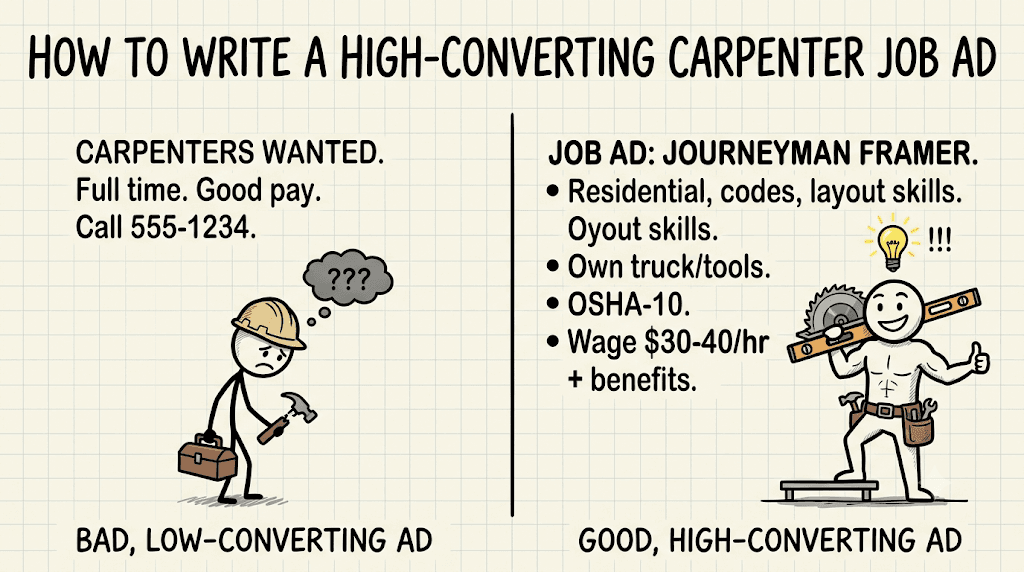
Every general contractor and project manager knows the headache of a botched framing job or a sloppy trim installation. When you post a generic "Carpenters Wanted" ad on a massive, bloated job board, you end up sorting through dozens of resumes from people who do not know a speed square from a framing square. You waste hours on phone interviews, or worse, you bring someone onto the jobsite who cannot cut a straight line or read blueprints accurately.
In the construction industry, time is literally money. A vacant crew position slows down your project timeline, pushes back inspection dates, and eats into your profit margins.
To attract top-tier journeymen and skilled apprentices who actually know how to handle a circular saw and respect OSHA safety standards, you need a job advertisement that speaks their language. Writing a high-converting job ad requires more than just listing a title and a phone number. It requires clear communication, realistic expectations, and proof that your crew is a team worth joining.
Speak the Language of a True Craftsman
Skilled carpenters are practical, straightforward people. They do not care about corporate buzzwords like "synergy" or "dynamic workplace culture." They want to know what kind of work they will be doing every day, what tools they need to bring, and how much they are getting paid.
When you write your job title, keep it specific and descriptive. Instead of just writing "Carpenter," try using titles that immediately self-filter your candidates:
Lead Residential Framing Carpenter
Commercial Finish and Trim Carpenter
Journeyman Formwork Carpenter
Apprentice Carpenter (1st or 2nd Year)
Using specific titles ensures your listing shows up when qualified tradespeople search ChiselJobs for their exact skillset. It also prevents unqualified residential painters or general laborers from cluttering your inbox.
Detail the Daily Grind and Tool Requirements
Do not leave your applicants guessing about the scope of work. A finish carpenter specializing in high-end cabinetry will be miserable if they show up to a site and find out they are tossing concrete forms all day. Break down the core job duties into a simple, scannable list that outlines the day-to-day realities of the job site.
Key Job Duties and Responsibilities
Read and interpret blueprints, architectural drawings, and sketches to plan layouts.
Construct, erect, install, and repair structures made of wood, wood substitutes, and lightweight steel.
Operate essential power tools including miter saws, table saws, circular saws, and pneumatic nail guns safely and efficiently.
Measure, cut, and shape materials with high accuracy using tape measures, levels, and framing squares.
Maintain a clean, organized, and compliant workspace in accordance with OSHA safety regulations.
Required Tool List
Experienced carpenters take pride in their tools. Be upfront about what they need to bring out of their own truck on day one, and what big equipment your company provides.
Note on Required Tools: Candidates must possess their own basic hand tools, including a quality tool belt, 25-foot tape measure, framing hammer, speed square, utility knife, and basic wood chisels. The company provides all major power tools, scaffolding, and safety harnesses.
The Compensation Transparency Factor
The fastest way to get a skilled carpenter to scroll past your job ad is to hide the pay scale. Phrases like "Competitive Wages" or "Pay Commensurate with Experience" are major red flags to high-quality workers. They imply that you are trying to get the cheapest labor possible rather than paying fair market value.
Be transparent about your pay structure, overtime opportunities, and how you handle regional travel or per diem costs.
Position Level | Hourly Rate Range (USD/CAD) | Key Requirements |
Apprentice Carpenter | $18.00 – $25.00 / hour | Basic tool knowledge, reliable truck, strong work ethic |
Journeyman Carpenter | $26.00 – $38.00 / hour | 4+ years experience, blueprint reading, layout mastery |
Lead Carpenter / Foreman | $39.00 – $50.00 / hour | Crew management, material ordering, code compliance |
Beyond the hourly rate, highlight the tangible benefits that matter to a tradesman. If you offer a tool allowance, boot stipends, steady year-round work without winter seasonal layoffs, or company-matched retirement plans, put those perks in bold text near the top of the description.
Localizing Licenses, Certifications, and Safety Standards
Building codes and licensing laws vary significantly depending on where your project is located. If your crew operates in a state or province that requires specific trade licenses, certified safety training, or union affiliations, state these requirements clearly under a dedicated "Qualifications" heading.
Minimum Qualifications and Certifications
High school diploma, GED, or completion of a recognized trade school program.
Valid driver's license with a clean driving record for operating company trucks.
OSHA 10-Hour Construction Safety Certification (OSHA 30 preferred for lead roles).
Proven experience working on residential wood-frame structures or commercial concrete projects.
Ability to lift up to 50 pounds regularly and work comfortably at heights on scaffolding or ladders.
How to Close the Deal and Get the Application
The final section of your job ad should make applying as frictionless as possible. Do not force a busy carpenter who has been working on his feet for ten hours to fill out a lengthy 45-minute online questionnaire or log into a complicated applicant tracking system.
Keep the call to action simple. Give them a direct route to talk to a human being. Tell them exactly who to contact, what to bring to an interview (like photos of their recent framing or trim work), and how quickly they can expect to hear back from your team.