The Definitive Lead Carpenter Job Description

ChiselJobs Team
Published on 2/13/2026
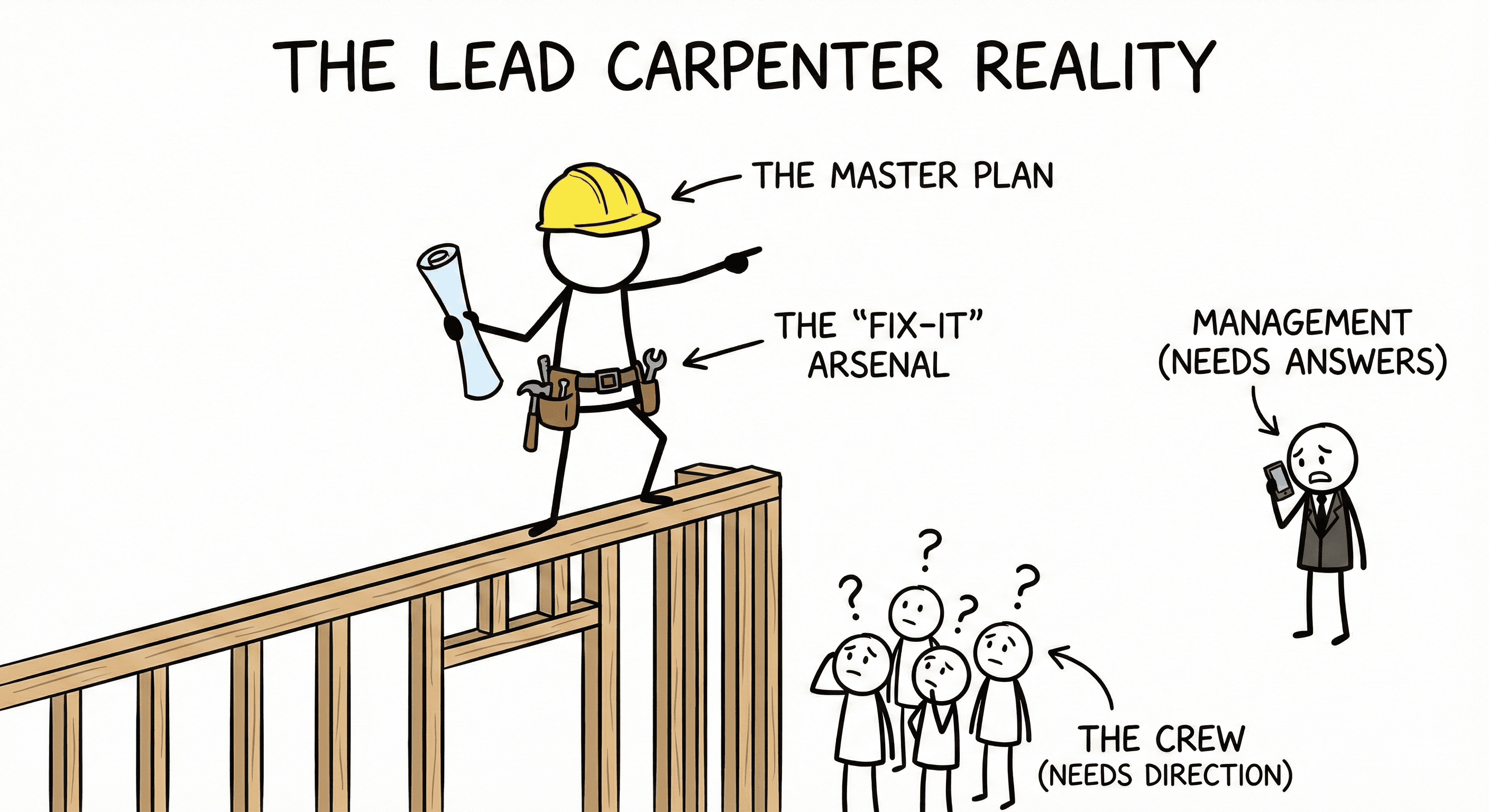
A lead carpenter is the driving force behind any successful construction or remodeling project. This role is a major step up from a standard journeyman position. Instead of just completing assigned tasks, a lead carpenter takes ownership of the entire job site. They make sure the project is built correctly. They also make sure it stays on schedule and meets the highest quality standards.
If you are a contractor looking to hire the right person, or a carpenter wanting to advance your career, understanding this role is highly important. This guide explains the daily duties, required skills, necessary tools, and salary expectations for lead carpenters working across North America. We will explore exactly what it takes to succeed in this demanding and rewarding career.
Understanding the Core Purpose of the Position
The lead carpenter serves as the main link between the project manager and the field crew. The project manager handles the overall budget and client contracts from an office. Meanwhile, the lead carpenter is on the ground making things happen. They are the eyes and ears of the general contractor.
Their main goal is to turn architectural blueprints into a physical building. This requires a deep understanding of the building process from the foundation to the final coat of paint. A great lead carpenter balances hard physical labor with smart site management. They solve problems before they become expensive mistakes. They keep the rest of the crew motivated. They also use digital tools like Procore or similar construction software to update schedules and track daily progress.
Key Daily Duties on the Construction Site
A lead carpenter handles a wide variety of tasks every single day. Their work involves both heavy construction and fine detailing. It also involves managing other people.
Mastering Site Layout and Preparation Every precise build starts with a perfect layout. Before any wood is cut, the lead carpenter reads the blueprints to understand the exact dimensions of the project. They use a transit level or laser level to establish straight lines and correct elevations. They snap chalk lines to mark exactly where exterior walls, interior partitions, and staircases will go. If the layout is wrong, the entire building will be crooked. This phase requires intense focus and attention to detail.
Executing Advanced Structural Framing Framing is the heavy lifting of the carpentry trade. The lead carpenter often builds the most complex parts of the structure. They calculate the correct angles for roof pitches and cut the roof rafters. They build load-bearing walls and install heavy structural beams. During this phase, they must understand local building codes perfectly. The International Code Council creates many of the standard rules that dictate how buildings must be put together. These codes explain how many nails must be used in a specific joint and what kind of lumber is required to support the weight of the house.
Delivering Flawless Finish Carpentry When the drywall is finished, the project moves into the trim phase. The lead carpenter takes charge of the finish carpentry to ensure the final product looks beautiful. This includes hanging solid wood doors so they open and close smoothly. They install baseboards, window casings, and complex crown molding. They also handle custom joinery. This means fitting pieces of wood together seamlessly for built-in cabinets or custom stairs. Many professionals read resources like Fine Homebuilding to learn new techniques for flawless interior finishes.
Managing the Crew and Subcontractors Building a house is a team effort. The lead carpenter supervises apprentice carpenters and general laborers. They teach younger workers how to use tools correctly and efficiently. Beyond their own crew, the lead carpenter also coordinates with other specialized trades. They schedule the electricians to wire the house before the walls are closed up. They communicate with plumbers and heating workers to make sure everyone has the space they need to work without delaying the project.
Essential Tools and Technical Trade Skills
To perform these duties, a lead carpenter must be highly skilled with their hands and their equipment. They are expected to own a comprehensive set of professional tools and know exactly how to maintain them.
Power Tools and Hand Tools A professional arrives at the job site ready for any task. They use a circular saw for cutting framing lumber and large sheets of plywood. They rely on a compound miter saw for making angled cuts on trim work. A table saw is used for cutting long boards down to the correct width. Pneumatic nail guns are essential for working quickly during framing and roofing. Smaller finish nailers are used for delicate trim.
Even with modern power tools, hand tools are still required. A lead carpenter uses sharp chisels for carving out space for door hinges. They use block planes to shave thin layers of wood for a perfect fit. Keeping these tools sharp and safe is a daily requirement.
Blueprint Reading and Math Skills Carpentry is a highly mathematical trade. A lead carpenter uses geometry and basic trigonometry daily. They must calculate the total square footage of a room to order the right amount of flooring. They must figure out the rise and run of a staircase so the steps are safe and comfortable to climb. Interpreting blueprints accurately is a mandatory skill. These drawings contain all the instructions for the build, and the lead carpenter must understand every symbol and measurement.
Required Training and Professional Certifications
You cannot become a lead carpenter overnight. This role requires years of hands-on experience and formal training.
Apprenticeship and Field Experience Most employers require a minimum of five to seven years of field experience in both rough and finish carpentry. Many lead carpenters complete a formal four-year apprenticeship program. In these programs, they learn the trade through a mix of classroom study and paid on the job training. Some workers also attend vocational schools to earn a certificate or degree in construction technology. Reading industry publications like the Journal of Light Construction (JLC) helps them stay updated on new building materials and modern techniques.
Industry Certification For carpenters working in residential remodeling, earning a formal certification is a massive advantage. The National Association of the Remodeling Industry (NARI) offers a Certified Lead Carpenter designation. To get this title, a carpenter must prove their field experience and pass a rigorous exam covering project management, building codes, and advanced carpentry skills. Having this certification shows employers and clients that you are a true professional.
Workplace Environment and Physical Demands
The daily work environment for this position is physically demanding. Lead carpenters do not sit behind a desk. They work outdoors in all types of weather. This includes freezing rain in the winter and extreme heat in the summer.
The physical toll is significant. A lead carpenter spends hours on their feet. They frequently climb tall ladders and balance on narrow roof trusses. They crawl through tight spaces under houses. They must have the physical strength to lift heavy building materials weighing 50 to 100 pounds on a regular basis. Good hand and eye coordination and excellent stamina are required to perform this job safely and effectively.
Safety Regulations on Site Safety is a massive part of the job description. The lead carpenter is usually the designated safety officer on the construction site. In the United States, employers highly prefer candidates who understand the rules set by the Occupational Safety and Health Administration (OSHA). They enforce the use of hard hats, safety glasses, and steel toe boots. They ensure that scaffolding is built securely and that fall protection harnesses are used when working on roofs.
In Canada, similar safety rules apply. The Canadian Centre for Occupational Health and Safety (CCOHS) provides guidelines that carpenters must follow to prevent injuries from tools, wood dust, and heavy lifting. Knowing how to safely handle hazardous materials and keep a job site clean prevents severe injuries. First Aid and CPR certifications are also standard requirements.
Salary Expectations Across the U.S. and Canada
Because this role requires a unique mix of physical skill and leadership ability, lead carpenters are paid very well. Compensation depends heavily on where you live, your experience level, and whether you belong to a labor union.
Earnings Overview in the United States In the U.S., wages are very competitive. According to recent data from Salary.com, the average annual salary for a lead carpenter usually ranges from $53,000 to $66,000. However, location plays a massive role in pay differences. In high demand construction markets like Seattle, Boston, or San Francisco, an experienced lead carpenter can easily earn well over $70,000 or even $80,000 a year. Top earners make more than $35 an hour. Non union workers negotiate their own pay. Meanwhile, members of the United Brotherhood of Carpenters (UBC) receive a set hourly wage along with strong pension and health insurance benefits.
Earnings Overview in Canada The Canadian construction market also shows strong demand for this position. Data from Job Bank Canada shows that the median wage for carpenters is around $32 per hour. However, lead carpenters with management duties earn much more. The top earners make over $44 per hour. In major building hubs like Vancouver or Toronto, top carpenters working on high-end custom homes often make $50 or more per hour. Unionized carpenters in Canada also enjoy excellent benefits packages. Across both countries, employers often provide extra perks like a company truck, gas cards, and yearly tool allowances to keep their best workers happy.
Future Career Growth Opportunities
The lead carpenter position is a perfect launching pad for further career development. Once a professional masters the art of running a job site, many new doors open for them.
Many choose to move into the office and become Project Managers. In this role, they oversee multiple building sites at the same time. They manage large company budgets and communicate directly with clients. Other lead carpenters transition into becoming Estimators. They use their deep knowledge of how long a task takes to accurately price out future building projects.
Finally, many ambitious lead carpenters take the ultimate step and start their own businesses. Because they already know how to manage a crew, deal with building inspectors, and order materials, they are perfectly positioned to get their General Contractor license and build their own company from the ground up.
Looking for verified carpentry jobs across the U.S. and Canada? Explore opportunities on ChiselJobs, the job board built for skilled trades.