Scaffold Carpenter Job Description with Examples

ChiselJobs Team
Published on 4/1/2026
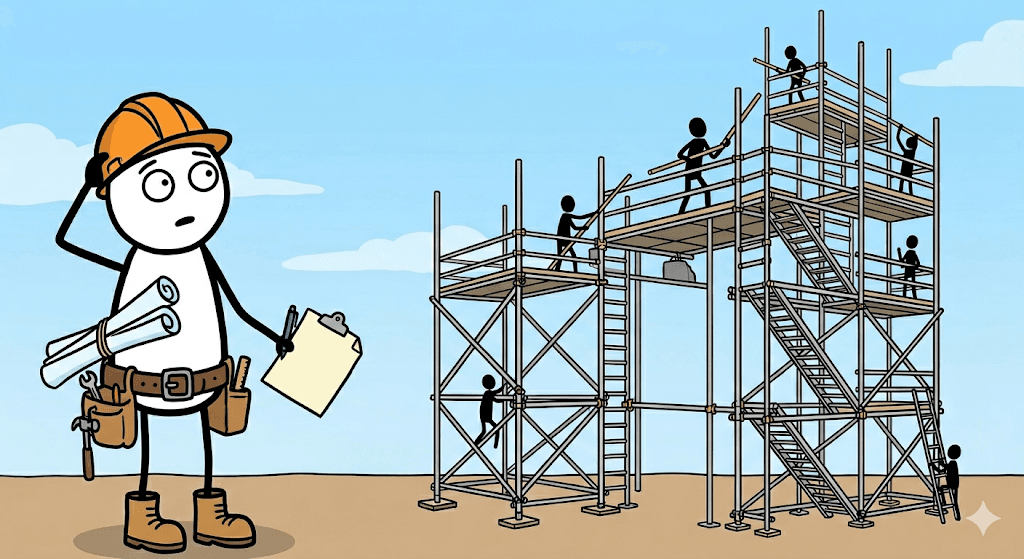
If you have ever stared up at a massive bridge pier or a towering industrial boiler and wondered how the crew manages to get up there safely, you are looking at the critical work of a scaffold carpenter. Here at ChiselJobs, we constantly see residential framers making the jump into commercial scaffolding. The pay is often highly competitive, and the work is remarkably consistent. However, it is an entirely different beast compared to framing out a residential basement.
A scaffold carpenter takes on the design, assembly, and safe dismantling of temporary elevated work platforms. This trade goes far beyond simply stacking pipes. It requires a deep understanding of structural integrity, live weight load calculations, and a relentless, non-negotiable focus on job site safety.
Real-World Scaffolding Scenarios
To truly understand what this job description looks like in practice, let us look at two distinct examples of where scaffold carpenters operate daily.
Example 1: The Gulf Coast Petrochemical Turnaround Down in Houston, Texas, a massive oil refinery undergoes a planned shutdown for maintenance. A crew of scaffold carpenters is brought in to build access platforms around complex, high-heat piping systems. They cannot use standard wooden frames here due to fire hazards. Instead, they rely heavily on tube-and-clamp systems, threading heavy steel poles through impossibly tight spaces. The carpenters must calculate the load of the heavy valves the pipefitters will be pulling, ensure their work aligns with OSHA scaffolding regulations, and maintain 100% tie-off while working 80 feet in the air above active chemical lines.
Example 2: The Chicago Commercial High-Rise In downtown Chicago, a new 40-story commercial tower is going up. The scaffold crew here uses engineered system scaffolding to create safe walkways and exterior platforms for the bricklayers and window glaziers. The challenge in the Windy City is the weather. The scaffold carpenters have to factor in extreme wind loads, tying the structure directly into the concrete superstructure of the building. Every morning, a designated competent person must walk the entire rig to inspect pins, planks, and guardrails before any other tradesman is allowed to step foot on it.
Core Workflows and Daily Realities
The daily grind on an industrial or commercial site is fast-paced and physically demanding. You are effectively solving a massive 3D puzzle where mistakes can cost lives.
Site Preparation: This starts with blueprints. You have to locate a solid footprint for the build. The ground base, known as mud sills, must be perfectly leveled and capable of carrying massive weight loads.
Vertical Assembly: Utilizing basic hand tools, crews secure ledgers, standards, and diagonal braces. This phase includes the mandatory installation of toe boards, guardrails, and secure stair towers.
Rigorous Inspection: Scaffolding requires a strict tagging system. You will inspect for plumb, level, and square metrics, verifying every clamp is secured tightly with a torque wrench.
System Dismantling: Tearing down a rig is often more hazardous than building it. Crews must systematically reverse the process without destabilizing the sections that are still standing.
The Specialized Toolbelt and Skillset
If you are a contractor looking to hire, or a carpenter looking to apply, the required tools look very different than a standard trim carpentry kit. You will trade your miter saw for heavy steel tools.
Height Competency: You must operate comfortably at extreme heights. Familiarity with NIOSH fall prevention standards and safety harnesses is absolutely essential.
Structural Mechanics: You need to understand how modular systems like Layher lock together compared to traditional scaffolding frameworks.
Brute Endurance: Scaffolders spend most of their shifts "passing iron," which means manually lifting heavy steel components up and down a human chain all day long.
Applied Mathematics: You must accurately determine live and dead weight capacities to ensure the platform will not fail under the strain of heavy materials.
Certifications and the Path Forward
A college degree is not necessary, but specialized training is vital. The best scaffolders often learn through an apprenticeship or hold up-to-date OSHA 10 or 30-hour safety cards. In major union cities like New York, safety managers strictly enforce ANSI A10.8 standards, which dictate the precise safety metrics for construction elevated platforms.
Ready-to-Use Scaffold Carpenter Job Description
If you are a project manager posting your next role on ChiselJobs, use this exact template to filter out unqualified applicants.
Job Title: Journeyman Scaffold Carpenter
Location: [Insert City/State, e.g., Dallas, TX]
Position Type: Full-Time / Turnaround Project
Job Summary: We are looking for a safety-focused Scaffold Carpenter to join our industrial site crew. Your primary role will be erecting and dismantling elevated platforms to provide safe access for pipefitters, welders, and masonry crews.
Key Responsibilities:
Stage, sort, and organize heavy scaffolding materials safely.
Construct diverse platform types including Tube and Clamp, Frame, and System builds.
Execute daily safety audits on all components prior to shift starts.
Maintain 100% fall protection compliance when operating above standard limits.
Follow all site-specific National Safety Council guidelines.
Qualifications:
A minimum of 3 years of hands-on industrial scaffolding experience.
Strong ability to decipher complex construction blueprints.
Reliable transportation and a valid driver's license.
Documented and current fall protection safety training.
Physical ability to lift 50 to 70 lbs continuously throughout a shift.
Wages and Building Your Career
According to labor data covering construction trades, wages fluctuate significantly based on your location and union status. In states with heavy industrial sectors like Texas or high commercial density like California, an experienced journeyman can earn between $30 and $48 per hour. If you take your skills on the road for refinery shutdowns, per diem pay can drastically inflate your annual earnings.
The typical career progression looks like this: Yard Laborer > Apprentice > Journeyman > Crew Lead > Competent Inspector > Superintendent.