Alternative Jobs for a Carpenter: Expanding Your Career Path

ChiselJobs Team
Published on 7/24/2026
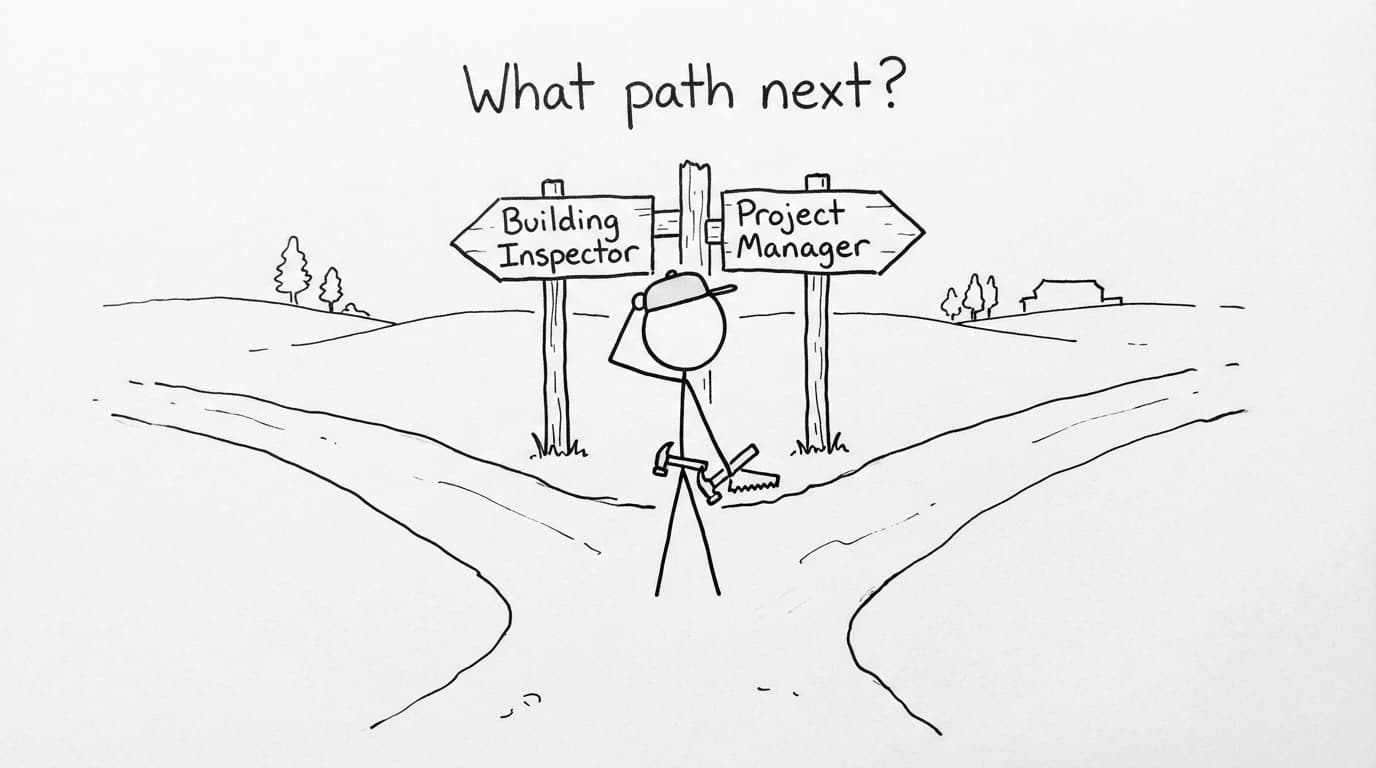
Carpenters looking to transition can leverage their skills in framing, layout, and building codes into high-paying roles like construction estimating, building inspection, project management, or custom furniture making. ChiselJobs matches skilled tradespeople with alternative career paths that offer better pay, less physical wear, and strong career growth.
Why should you consider transitioning out of traditional carpentry?
Carpentry is rewarding, but it takes a heavy physical toll. Years of holding heavy nail guns, running a circular saw, lifting heavy timber, and working on your knees can wear out your joints. Many carpenters find that as they get older, they want to step off the staging and move into roles that are easier on the body.
Transitioning does not mean starting over from scratch. Your years on the jobsite have given you deep practical knowledge that cannot be learned in a classroom. You already understand how a building goes together, how to read blueprints, and how to work safely under OSHA safety rules.
Data collected by ChiselJobs shows that experienced carpenters who transition into management, estimation, or specialized shop roles often see an increase in their hourly earnings while reducing their risk of on-the-job injuries. Your knowledge of framing, layout, and structural integrity is highly valuable to employers who need people who understand how field work actually gets done.
What are the best alternative career paths for experienced carpenters?
There are several strong career paths where your hands-on experience gives you a major advantage over other candidates. Here are the top alternative jobs for carpenters who want to transition.
1. Construction Estimator
Estimators calculate the total cost of materials, labor, and equipment for a building project.
Job Duties: You will read architectural drawings, calculate material takeoffs for framing and drywall, and request quotes from subcontractors.
Why Your Skills Transfer: You know exactly how much waste to expect on a job, how long a task takes, and how much material is actually needed for a proper layout.
Workplace Environment: Primarily office-based with occasional site visits.
2. Building Inspector
Building inspectors work for city or county governments to ensure that new construction and renovations meet local safety codes.
Job Duties: You will visit jobsites, review building plans, inspect structural framing, and sign off on completed work.
Why Your Skills Transfer: You already know structural building codes and OSHA safety standards. You know how to spot poor workmanship quickly.
Workplace Environment: A mix of office work and field inspections.
3. Construction Project Manager or Superintendent
Superintendents and project managers run the entire jobsite. They coordinate schedules, manage subcontractors, and keep projects on budget.
Job Duties: You will schedule deliveries, direct crews, solve construction problems on site, and report to project owners.
Why Your Skills Transfer: Carpenters are usually on site from the concrete pour to the final trim. You already understand the sequence of construction better than almost any other trade.
Workplace Environment: On-site trailer or hybrid office.
4. Custom Woodworker or Furniture Maker
If you love working with your hands but want to escape the weather and the heavy framing, custom woodworking is a great route.
Job Duties: You will design and build high-end cabinets, custom furniture, and detailed architectural millwork.
Why Your Skills Transfer: This role relies heavily on your training in finish carpentry, precise joinery, and the expert use of hand tools like chisels and levels.
Workplace Environment: Climate-controlled woodshop.
What can you expect to earn in these alternative carpentry careers?
Earnings vary based on your experience, location, and whether you work in a union or non-union environment. According to ChiselJobs market research, moving into an estimator or management role often leads to a more stable, salaried income with better benefits.
Job Title | Average US Salary (Annual) | Average Canadian Salary (Annual) | Primary Skills Required |
Construction Estimator | $75,000 - $95,000 | $80,000 - $100,000 | Blueprint reading, math, software |
Building Inspector | $62,000 - $80,000 | $68,000 - $85,000 | Building codes, local regulations |
Project Superintendent | $85,000 - $115,000 | $90,000 - $120,000 | Leadership, scheduling, safety |
Custom Woodworker | $45,000 - $65,000 | $50,000 - $70,000 | Joinery, finish carpentry, shop tools |
Union versus non-union pay differences
Union carpenters who transition into superintendent or coordinator roles often maintain their union benefits, pension plans, and high hourly rates. Non-union roles in private construction companies may offer more flexible salary negotiations, performance-based bonuses, and faster promotion tracks if you are a hard worker.
How do your existing carpentry skills transfer to these new roles?
You do not need to go back to school for four years to make a career change. Your daily work on the jobsite has already taught you most of what you need to know.
Framing and Layout: This teaches you spatial awareness, basic math, and structural design. It is the exact foundation needed for construction estimating and structural building inspection.
Finish Carpentry and Joinery: Your eye for detail and your experience with fine hand tools like chisels and levels make you a perfect fit for high-end furniture shops or finish-quality control management.
OSHA Safety Standards: Keeping your crew safe on the jobsite prepares you for roles as safety coordinators or field superintendents.
Tool Competency: Knowing how to operate tools like a circular saw or nail guns safely allows you to train apprentices or transition into tool sales and product demonstration for major manufacturing brands.
What certifications will help you land these alternative jobs?
If you want to make your resume stand out on ChiselJobs, getting a few quick certifications can make a major difference. Most of these can be completed online or through short evening classes.
OSHA 30-Hour Card: This certification proves you understand jobsite safety. It is a basic requirement for almost any supervisory or safety role in North America.
ICC Inspector Certifications: The International Code Council offers exams for residential and commercial building inspectors. Passing these exams is the fastest way to get hired by local municipalities.
Certified Professional Estimator (CPE): Offered by the American Society of Professional Estimators, this credential proves you know how to accurately price construction projects.
Associate Constructor (AC): This is a great certification for carpenters looking to move into management without holding a college degree in construction science.
How do you start your career transition?
To make a successful transition, start by updating your resume to focus on your leadership, safety record, and planning skills rather than just your physical labor. Highlight times you ran a crew, coordinated with other trades, or solved layout problems on the fly.
Create a profile on ChiselJobs to search for employers who specifically value hands-on trade experience for their office and management roles. Many construction firms prefer hiring project managers and estimators who have spent real time on a jobsite over college graduates who only know construction from a textbook.