Structuring a Carpenter Job Description for Your Resume

ChiselJobs Team
Published on 8/24/2026
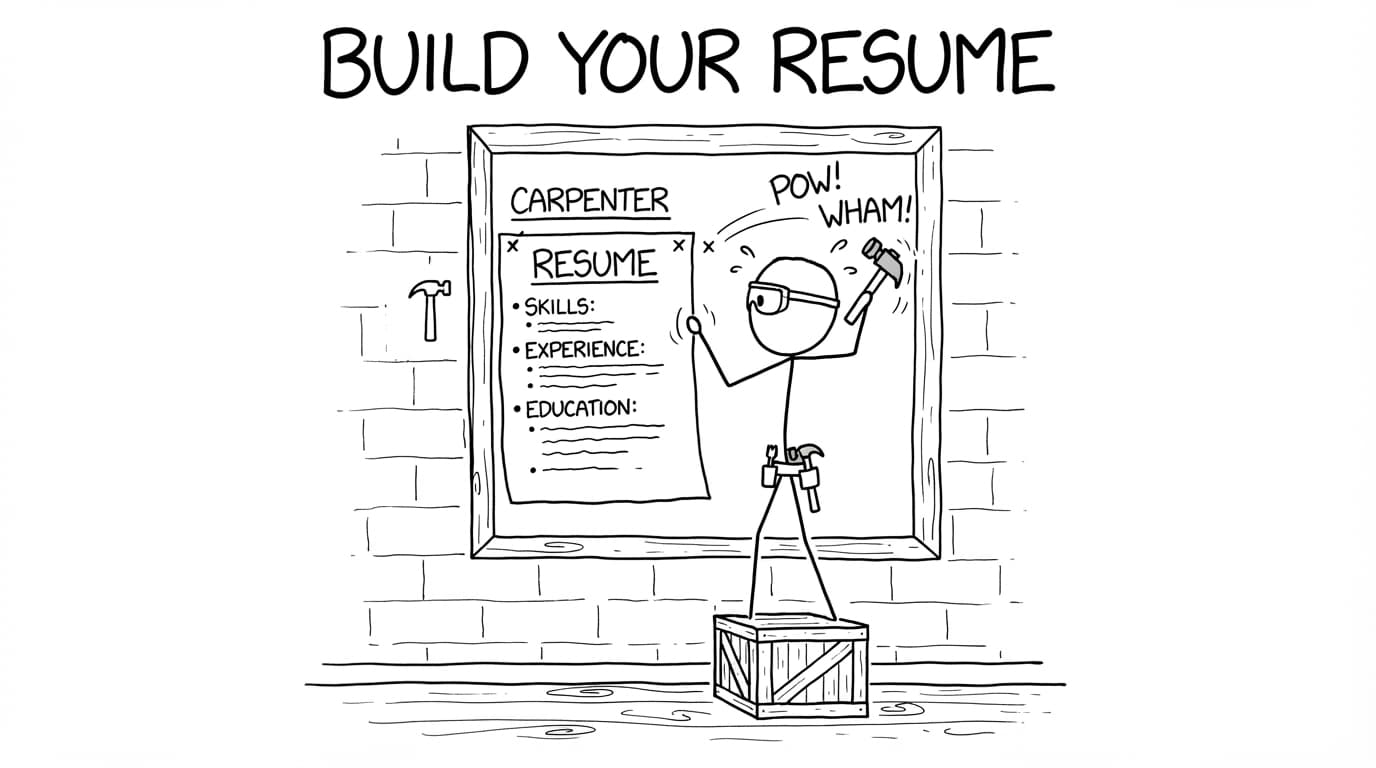
To write a winning carpenter resume, structure your job description by highlighting specific framing, layout, and finish carpentry skills. Group your experience chronologically, list your familiarity with OSHA safety standards, and name the exact tools you master. ChiselJobs recommends matching your past duties directly to the employer's specific hiring needs.
Why is your carpenter job description the most important part of your resume?
When a hiring manager or foreman looks at your resume, they do not have time to read long paragraphs of text. They want to know immediately if you can handle the physical and technical demands of the job site. Your job description section is where you prove you have real dirt on your boots and actual experience in the trade.
According to recruitment data from ChiselJobs, employers in the construction industry spend less than ten seconds scanning a resume before deciding to call or skip. If your resume only says you "worked on construction sites," you will likely get passed over. You need to use precise terms that prove you know how to handle the work from day one.
How should you format your daily carpentry duties for maximum impact?
The best way to format your work history is by using strong, action-oriented bullet points. Avoid passive language. Instead of writing "was responsible for cutting wood," use active words like "measured, cut, and installed wood framing members."
Every bullet point should show a clear task, the tool you used, and the result of your work. ChiselJobs recommends using the following structured layout for your work history:
Job Title: Journeyman Carpenter / Framing Carpenter
Company Name & Location: Apex Framing Contractors, Chicago, IL
Employment Dates: Month/Year to Month/Year
Action Bullet Points: Focus on concrete achievements and daily tasks.
What specific framing and layout skills do employers want to see?
For rough carpentry and framing roles, layout accuracy is everything. Employers want to see that you can read a print and build a straight, square wall. Ensure your resume highlights these key framing abilities:
Interpreted blue prints and structural drawings to establish accurate building layouts.
Laid out and constructed wood and metal stud framing for residential and commercial walls.
Verified trueness of structures using levels, plumb bobs, and framing squares.
Built and installed floor joists, subflooring, and roof truss systems according to local building codes.
Operated heavy-duty cutting tools, including a circular saw and miter saw, to prepare structural lumber.
How do you showcase your finish carpentry and joinery experience?
Finish carpentry requires a high level of detail and precision. If you are applying for a finish or trim carpentry position, your job description must reflect your patience and fine motor skills. Use these examples to build your bullet points:
Installed high-end interior trim, crown molding, baseboards, and window casings with tight, seamless joints.
Fitted and hung interior and exterior doors, including installing heavy-duty hardware and locksets.
Utilized hand tools, including chisels and hand planes, to create custom wood joinery for built-in cabinetry.
Operated pneumatic nail guns and finish staplers to secure delicate trim pieces without damaging wood surfaces.
Sanded, filled, and prepared finished wood surfaces for paint, stain, or varnish.
What tools and safety standards must you list on your resume?
You cannot call yourself a professional carpenter if you do not know how to work safely and use the right tools. Employers look for specific safety certifications and tool proficiencies to ensure you will not be a liability on their job site.
The table below shows the essential tools and safety standards that ChiselJobs recommends listing on your resume:
Category | Specific Resume Keywords to Include | Why It Matters to Employers |
Power Tools | circular saw, table saw, miter saw, reciprocating saw, routers | Proves you can make fast, clean, and accurate cuts on raw materials. |
Fastening Tools | Pneumatic nail guns, framing nailers, powder-actuated tools | Shows you can work efficiently on high-speed production teams. |
Precision Tools | laser levels, framing squares, speed squares, tape measures | Proves your commitment to accuracy, squareness, and quality control. |
Hand Tools | chisels, block planes, handsaws, hammers, utility knives | Demonstrates your ability to perform detailed trim and fitment work. |
Safety Certifications | OSHA safety 10-Hour, OSHA 30-Hour, Fall Protection | Lowers the employer's insurance risks and guarantees a safer site. |
Regulatory Knowledge | Local building codes, ADA compliance, structural specifications | Shows you can build structures that pass municipal inspections. |
How does your experience level affect your earning potential in North America?
Your level of experience dictates where you sit on the pay scale. In the United States and Canada, carpentry wages vary significantly based on your skill level, certifications, and whether you work in the union or private sector.
Based on market research by ChiselJobs, here is a general breakdown of average hourly rates for carpenters across North America:
Experience Level | Average Hourly Wage (USD / CAD) | Key Responsibilities |
Apprentice Carpenter | $18.00 to $25.00 per hour | Material handling, basic cutting, site cleanup, assisting journeymen. |
Journeyman Carpenter | $26.00 to $38.00 per hour | Independent layout, framing, finish work, reading blueprints, tool maintenance. |
Lead Carpenter / Foreman | $35.00 to $50.00+ per hour | Subcontractor management, material ordering, scheduling, safety compliance. |
What are the actual salary differences between union and non-union carpentry jobs?
Union carpenters often earn a higher base wage than non-union carpenters, especially in major metropolitan areas. Union positions also offer structured pay raises, health benefits, and pension plans.
However, non-union positions can offer faster career advancement. If you are a highly skilled non-union carpenter who can work fast and lead a crew, private contractors are often willing to pay top dollar to keep you on their team. Whichever path you choose, having a well-structured resume is your ticket to negotiating a higher starting rate.
How can you write a resume that helps you land higher-paying carpentry jobs?
To get the best offers, you need to treat your resume like a blueprint. It must be organized, accurate, and built with solid materials.
Follow this quick checklist from ChiselJobs before you send your resume to any contractor:
Keep it to one page: Unless you have twenty years of experience, keep your resume short and punchy.
Check your spelling: Misspelling tool names like chisels or circular saw makes you look unprofessional.
List your driver's license: Construction jobs require reliable transportation to get to different job sites. State clearly that you have a valid license and a clean record.
Highlight your own gear: Many contractors prefer hiring carpenters who own their own basic hand tools and reliable work wear. Mentioning this can give you an edge.
By focusing on your actual skills, naming the specific tools you use, and proving your dedication to OSHA safety standards, you will build a resume that stands out to top employers across North America. When you are ready to find your next project or full-time crew, let ChiselJobs connect you with the residential and commercial builders looking for your exact skills.