Carpenter Safety Requirements: 2026 OSHA Updates

ChiselJobs Team
Published on 3/23/2026
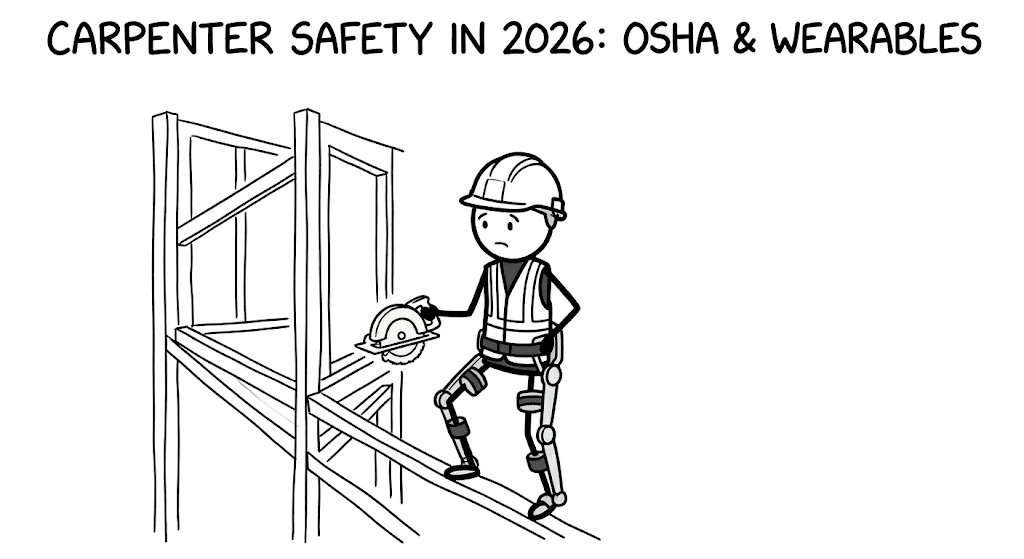
Welcome to the new era of jobsite safety. If you are swinging a hammer, running a circular saw, or managing a framing crew in 2026, the rules of the game have evolved. The Occupational Safety and Health Administration (OSHA) has rolled out stringent new updates that directly impact daily operations for carpenters across the United States. Furthermore, wearable technology is no longer a futuristic concept. It is actively saving lives and protecting careers on modern construction sites.
This guide breaks down exactly what contractors, apprentices, and seasoned carpenters need to know about the latest safety mandates and the high tech gear entering the trade.
Navigating the Latest OSHA Mandates for Carpentry Crews
The days of sharing universal safety gear are officially over. One of the most significant 2026 OSHA updates mandates that personal protective equipment must properly fit every individual worker. This is a massive shift for the construction industry. A loose harness or an oversized hard hat is now a direct compliance violation. This rule ensures that all carpenters, regardless of their body type, receive adequate protection when working at heights or handling heavy materials. You can review the specifics of these fit requirements directly through the Occupational Safety and Health Administration.
Heat hazard protections have also taken center stage. If you are doing layout work or framing houses in the blistering heat of Texas or California, OSHA now requires strict heat illness prevention plans. Employers must provide mandatory hydration stations, shaded rest areas, and conduct routine heat risk assessments. These changes are designed to keep crews safe during peak summer months, preventing heat exhaustion before it starts. Organizations specializing in onsite health, such as Medcor, are helping contractors implement these mandatory wellness checks.
The Rise of Smart Gear on the Jobsite
Wearable technology is rapidly becoming standard issue for North American tradespeople. Construction tech companies are embedding advanced sensors into the gear you already wear every day. This technology monitors vital signs, detects environmental hazards, and communicates real time data to safety managers.
Here are the top wearable innovations hitting carpentry sites in 2026:
Smart Helmets: Modern hard hats do much more than deflect falling debris. Connected helmets now feature sensors that track body temperature and detect sudden impacts. If a carpenter takes a fall while working on roof trusses, the helmet instantly alerts supervisors. Tech platforms like Procore are deeply integrating this live safety data into their project management software.
Heat Stress Patches: Worn directly on the skin, these biometric patches measure sweat loss and skin temperature. They provide personalized hydration alerts, which is an absolute game-changer for crews working outdoors in high temperature zones.
Geofenced Safety Vests: High-visibility vests now come equipped with proximity sensors. If a finish carpenter accidentally steps into a restricted drop zone or gets too close to heavy equipment, the vest vibrates to provide an immediate physical warning. The National Association of Home Builders strongly advocates for these proactive safety measures to prevent jobsite collisions.
Protecting Your Joints with Exoskeletons
Carpentry is notoriously hard on the body. Years of lifting heavy timbers, kneeling for layout tasks, and bending over to use chisels or joinery tools will inevitably take a toll on your back and knees. To combat this physical breakdown, active and passive exoskeletons are gaining massive traction in the trade.
These wearable mechanical suits absorb the physical strain of repetitive lifting. Whether you are hoisting large sheets of plywood in Chicago or installing heavy custom cabinetry in a New York high rise, an exoskeleton redistributes the weight away from your vulnerable joints. The National Institute for Occupational Safety and Health reports that adopting ergonomic assistance devices drastically reduces the rate of musculoskeletal disorders among tradespeople, extending careers by years.
Financial Benefits and Localized Safety Demand
Safety compliance is heavily tied to regional demand and prevailing wages. In booming construction markets like California and New York, the demand for skilled carpenters remains incredibly high. Union carpenters in cities like Chicago and Boston are not only securing top tier wages but are also leading the charge in adopting these new safety standards.
It is a proven fact that safety directly impacts your bottom line. Experienced carpenters who hold up to date safety certifications and operate within compliant, tech forward companies often command higher salaries. Employers are willing to pay a premium for workers who understand the latest regulations because it lowers the company's insurance liabilities and reduces costly project delays. Organizations like the Associated General Contractors of America note that strong safety records directly improve a company's bonding capacity and ability to win lucrative bids. Financial platforms tailored to construction emphasize that documenting these safety metrics is crucial for securing competitive insurance rates.
Integrating Tech with Traditional Tool Safety
Even with advanced wearables, the foundational rules of tool safety remain critical. A smart watch cannot stop a kickback from a circular saw, and an exoskeleton will not save you from a poorly placed nail gun shot. However, combining traditional training with digital monitoring creates a highly resilient safety culture.
Vibration Monitoring: Prolonged use of power tools like nail guns, orbital sanders, and routers can lead to severe nerve damage. New smart gloves monitor vibration exposure and alert the user when it is time to switch tasks.
Slip and Fall Detection: Smart boots track your footing. If you trip over a power cord or slip on sawdust while checking a level, the boots immediately register the incident. This data helps site managers identify hazard hotspots. You can read more about tracking injury metrics and prevention strategies via the Bureau of Labor Statistics.
Noise Exposure Tracking: Hearing loss is a silent epidemic in the trades. Ear protection equipped with digital decibel meters ensures you are not exposed to unsafe noise levels while operating heavy machinery. The American Society of Safety Professionals offers extensive resources on hearing conservation and modern protective equipment.
The integration of strict OSHA standards and cutting-edge wearables is not meant to slow you down. These protocols exist to ensure you can perform complex joinery, build robust frames, and execute flawless finish carpentry for decades to come. By embracing these 2026 updates, construction professionals are building a safer and more profitable future for the entire trade. For additional insights on maintaining compliance and training your crew, consult resources from the Construction Industry Safety Coalition.