NYC Carpenter: A 2026 Guide to Working the Five Boroughs

ChiselJobs Team
Published on 6/15/2026
If you are swinging a hammer in New York City, you already know the environment is different here. You are not just dealing with the standard framing and trim work. You have tight building codes, high-rise logistics, and union requirements that completely change how a job site runs. Whether you are coming straight out of high school, finishing an apprenticeship, or looking to move into the city for better pay, understanding the NYC carpentry market is the only way to keep your tools turning a profit.
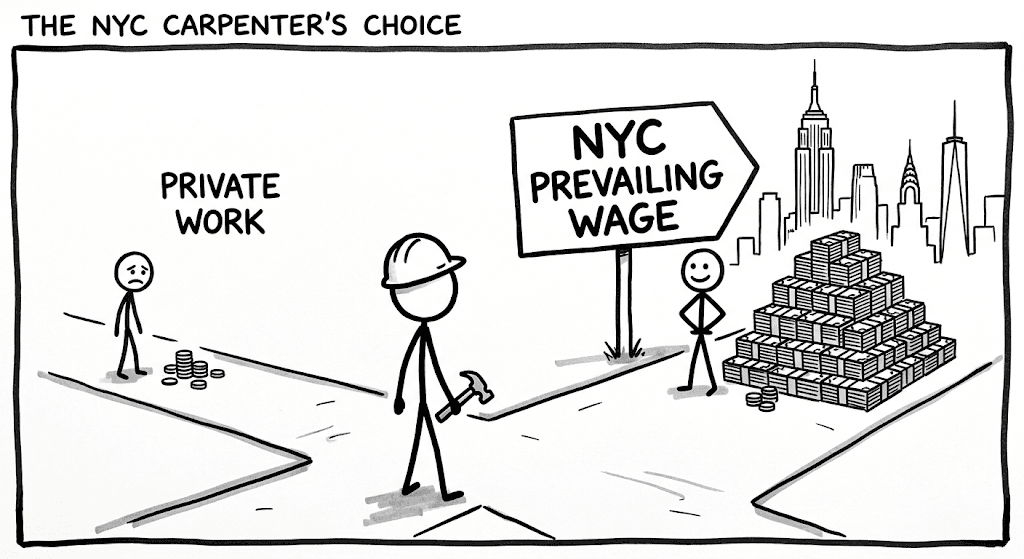
New York City runs on prevailing wages for public works. This means if you are on a city or state contract, your paycheck is protected by law. Let us break down what you actually do, what you get paid, and how the new 2026 laws affect your toolbelt.
What NYC Carpenters Actually Do on Site
Carpentry in the city is split into a few different lanes. Depending on the contractor you sign with, your daily tasks will look very different.
Commercial Framing and Drywall: This is the bread and butter for many city carpenters. You are working with heavy gauge steel studs, laying out massive floor plans using lasers, and handling commercial drywall.
Concrete Formwork: High-rises need concrete. Form carpenters build the temporary wooden or metal molds that hold the concrete in place until it sets. This is heavy, fast-paced work that requires precision to make sure the building stays plumb and level.
Finish Carpentry and Millwork: If you have the patience for tight tolerances, finish work is where you shine. This involves installing high-end custom cabinetry, baseboards, crown molding, and architectural woodwork in expensive apartments and corporate lobbies.
General Site Duties: You will always need to know how to safely operate a circular saw, use a powder-actuated nail gun for fastening tracks to concrete, and keep your layout marks exact.
Breaking Down the Paycheck
The biggest reason tradesmen flock to New York is the money. If you land a job on a prevailing wage project (like a public school, subway station, or government building), the city forces contractors to pay a set rate.
The Base Rate and Benefits
As of 2026, the prevailing wage for a journeyman carpenter in NYC sits around $53.50 to $55.00 per hour for straight time. But that is only half the story. Prevailing wage laws also require contractors to pay supplemental benefits.These cover your health insurance, pension, and vacation time. The benefit rate is roughly $34.00 per hour.
When you add it all up, the total compensation package for a prevailing wage carpenter is pushing $90.00 an hour. If you work off-shift or weekends, overtime rules kick in, and those rates go up fast.
Union Versus Non-Union Shops
The NYC District Council of Carpenters has a massive presence in the city. If you join the union, your pay scale is strictly mapped out. Apprentices start at a percentage of the journeyman rate and get raises as they complete their classroom hours and on-the-job training. Union guys get full benefits, pension contributions, and representation.
If you work non-union (often called open shop), your pay can vary wildly. A non-union finish carpenter working in private residential remodels might make anywhere from $25.00 to $45.00 an hour. However, you will usually have to negotiate your own health insurance and retirement plans. The tradeoff is that non-union shops often have steadier year-round work if they specialize in private interior renovations.
The New 2026 Off-Site Fabrication Rules
If you work in a cabinet shop or build custom panels, 2026 brought a massive change to your job. Starting in June 2026, New York expanded the prevailing wage law to cover off-site custom fabrication.
Before this rule, if a contractor built custom woodwork, wall panels, or cabinetry in a shop outside the city and shipped it to a public works site, the shop guys did not get prevailing wages.Now, if the custom millwork is designed specifically for a public project, the carpenters building it in the shop must be paid the prevailing wage rate.This is huge news for shop carpenters who usually make less than the guys swinging hammers on the actual job site.
How to Bump Up Your Earnings
If you want to maximize your income in the NYC market, you need the right cards in your wallet. The city is incredibly strict about safety, and you will not even be allowed to step onto a major commercial site without proof of training.
Get Your SST Card: Site Safety Training (SST) is mandatory. You need at least 40 hours of training to get your worker card. Without this, employers will skip your resume entirely.
Complete OSHA 30: While OSHA 10 is a good start, having your OSHA 30 certification shows you understand the strict safety codes regarding fall protection, scaffolding, and power tools.
Specialize in Layout: Anyone can cut a board on a line. If you can read complex blueprints, use a transit level, and snap the exact layout lines for the rest of the crew to follow, you become irreplaceable. Layout men are usually the first ones on the site and the last ones laid off.
Finding the Right Crew
The carpentry trade in New York City is not for the faint of heart. You will deal with brutal commutes, freezing winters on open floors, and strict inspectors. But if you put in the hours, learn the codes, and keep your chisels sharp, the financial payoff is one of the best in North America. Check out the latest listings on ChiselJobs to find contractors who are looking for reliable hands right now. Keep your head down, work safe, and build something that lasts.