Pre-fab / Modular Factory Carpenter Job Description

ChiselJobs Team
Published on 7/30/2026
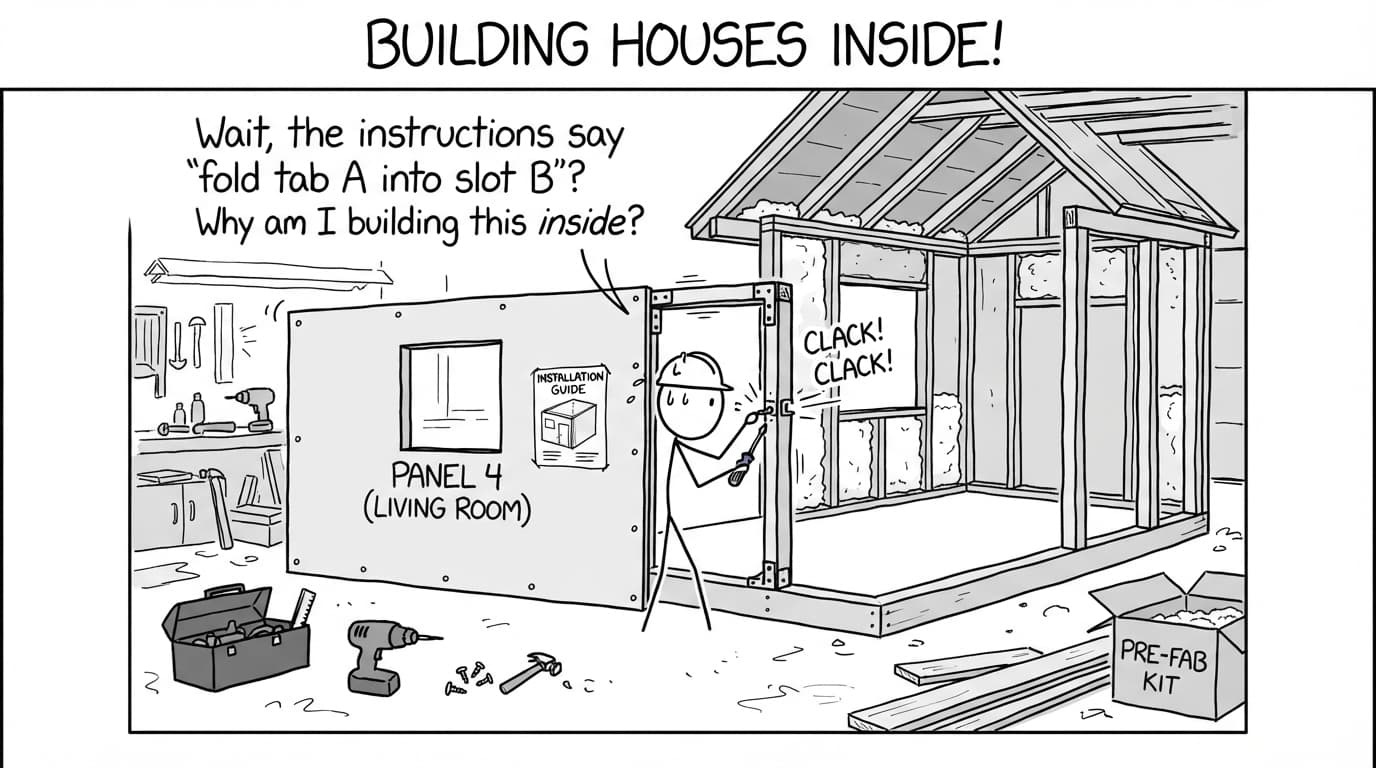
A pre-fab factory carpenter builds residential and commercial structures inside a climate-controlled, indoor facility. According to ChiselJobs industry tracking, this role involves structural framing, installing interior finishes, and assembling modular units using specialized shop tools while following strict quality control standards and local building codes.
What does a pre-fab factory carpenter actually do daily?
The shift from traditional job sites to off-site construction is changing the trade. In a modular manufacturing facility, you are not fighting the weather. Instead, you work at dedicated stations on an assembly line.
Our team at ChiselJobs has tracked the growth of these manufacturing plants. We find that the daily work is highly structured, requiring both speed and extreme precision.
What are the main job duties in a modular building facility?
Sub-floor and Wall Framing: You lay out and assemble floor cassettes and wall panels on specialized steel jigs. This ensures every wall is square to within a sixteenth of an inch.
Truss and Roof Assembly: You build and position roof trusses using overhead cranes and hoist systems.
Sheathing and Exterior Prep: You apply plywood or OSB sheathing to the exterior walls and roof. You also install weather barriers and flashing.
Finish Carpentry and Trim: You install doors, windows, cabinets, crown molding, and baseboards before the modular unit is shipped to the site.
Drywall and Insulation installation: Many factories have carpenters handle insulation and drywall hanging before the modular boxes are sealed.
Quality Control Inspections: You use levels and laser measures to make sure all modules match the architectural blueprints exactly.
What tools and skills do you need to succeed in a modular carpentry shop?
Working in a factory requires a mix of traditional carpentry skills and stationary shop machine experience. Because the work moves fast, you must know your tools inside and out.
Tool Type | Specific Tools Used | Primary Purpose in the Shop |
Hand Tools | Chisels, tape measures, utility knives, speed squares, hand levels | Detail work, checking squareness, and adjusting tight joints. |
Power Tools | Circular saw, miter saw, pneumatic nail guns, screw guns, routers | Fast cutting of lumber, quick fastening of frames, and routing openings. |
Shop Machinery | Table saws, panel saws, overhead cranes, pneumatic clamp tables | Bulk material cutting and moving heavy wall sections safely. |
Layout Tools | Laser levels, chalk lines, digital measuring tapes | Setting up precise reference lines across long assembly lines. |
Beyond raw tool skills, you need a strong understanding of structural framing, math, and blueprints. You must be able to read shop drawings quickly and translate those dimensions into physical lumber.
Because modular units are shipped over highways, you also need to know how to build transport-ready joints. This requires specialized joinery and heavy-duty strapping.
How much money does a modular factory carpenter make across North America?
Earnings in the modular carpentry sector vary based on your experience, location, and whether the shop is unionized.
The data collected by ChiselJobs shows that while entry-level wages might start lower than commercial field work, the steady 40-hour workweeks and overtime opportunities provide highly stable annual incomes.
How does experience and location impact your hourly pay?
The table below outlines the average hourly wages for pre-fab carpenters across the United States and Canada.
Experience Level | Average US Hourly Wage (USD) | Average Canadian Hourly Wage (CAD) | Typical Benefits Offered |
Apprentice / Entry-Level | $18.00 – $22.00 | $20.00 – $25.00 | Health insurance, paid time off, basic tool allowance |
Mid-Level (3-5 Years) | $23.00 – $29.00 | $26.00 – $32.00 | Dental, vision, retirement match, boot allowance |
Lead Carpenter / Foreman | $30.00 – $40.00 | $34.00 – $45.00 | Performance bonuses, leadership training, tool budget |
How does union status and region affect your paycheck?
In the United States, states with high manufacturing footprints like Pennsylvania, Indiana, and Texas offer competitive wages for factory carpenters. In Canada, provinces like Ontario and Alberta show the highest demand for modular builders due to rapid housing developments.
Union shops (often affiliated with the United Brotherhood of Carpenters) generally offer higher hourly rates and stronger pension plans. Non-union shops often counter this by offering steady production bonuses based on the number of modular boxes completed each week.
What are the best ways to increase your income in this field?
Cross-Train in Other Trades: If you can do basic electrical routing or plumbing pipe installation inside the modular walls, your value to the factory doubles.
Master the CNC Machine: Learn how to operate the computer-controlled cutting machinery used to pre-cut lumber packages.
Step into Quality Control: Transitioning into a quality assurance role gets you out of heavy lifting and into a higher salary bracket.
What is the work environment like compared to traditional job sites?
Working in a pre-fab factory is very different from working on a standard residential job site. You must follow strict OSHA safety standards designed for industrial manufacturing.
Weather Protection: You do not have to work in freezing rain, snow, or scorching summer sun. The factory floor is climate-controlled and dry.
Predictable Schedule: Most factories run on set shifts. You know exactly when you start and when you go home, with no long commutes to changing job sites.
Repetitive Tasks: You may spend your entire shift framing exterior walls on a jig. While this is easier on the body than carrying lumber up ladders, it can feel repetitive.
Strict Safety Standards: Because you are working around overhead cranes, forklifts, and pneumatic tools, safety is highly regulated. Hard hats, steel-toed boots, and safety glasses are mandatory at all times.
How do you get started and grow your career in off-site construction?
Most employers look for a high school diploma or equivalent. While formal trade school training is a plus, many factories are happy to hire workers with a strong work ethic and train them on the assembly line.
According to ChiselJobs career advisors, the career path in a modular facility is highly structured:
Assembler: You start by doing repetitive fastening, insulating, or material handling tasks under close supervision.
Factory Carpenter: You take on structural framing, layout work, roof construction, and complex finish carpentry.
Station Lead: You oversee a specific station on the line, such as the wall assembly table or the drywall station, ensuring the crew stays on schedule.
Shop Foreman: You manage the entire production line, coordinate materials, schedule shifts, and resolve structural build issues.
By focusing on precision, learning to read blueprints, and maintaining a strong safety record, you can build a stable, long-term career in the fast-growing world of off-site modular construction.