Carpenter Jobs in Seattle: Tech Hub Construction Growth

ChiselJobs Team
Published on 6/24/2026
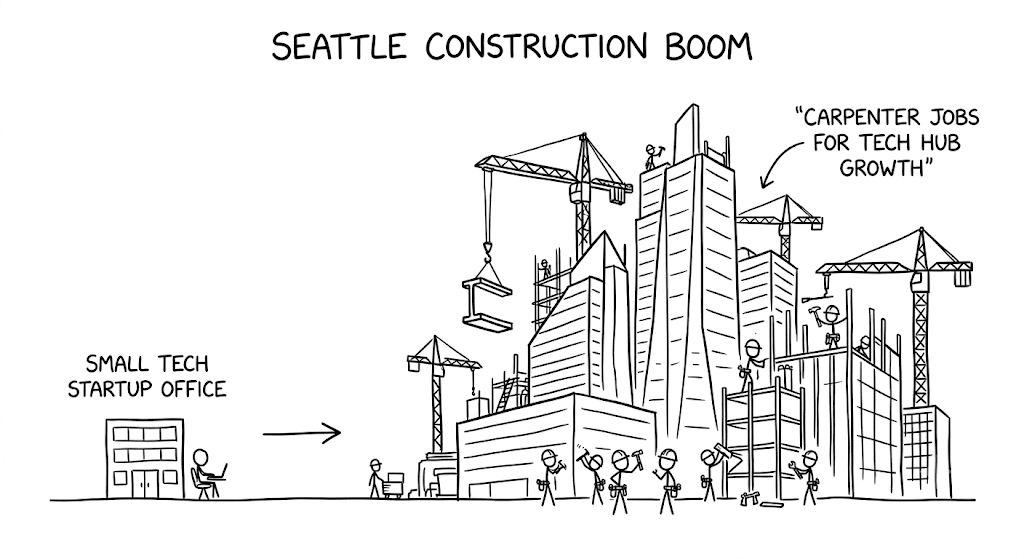
Seattle is known for rain, coffee, and massive tech companies. But right now, the real story is happening on the ground level. Construction is booming across King County. We are seeing a massive push for commercial spaces, housing for tech workers, and high-tech data centers. For anyone swinging a hammer or running a crew, this means one thing: opportunity.
If you know how to read a set of prints, frame a wall square, or handle finish carpentry with tight joinery, contractors in Seattle are looking for you. The tech boom has completely changed the landscape of the city. While office building has slowed down in some spots, the demand for modern industrial spaces, apartments, and infrastructure is keeping job boards packed.
Let us look at what it really takes to work as a carpenter in Seattle right now, what you can expect to earn, and how to get your foot in the door on the best projects.
What You Can Expect to Earn on a Seattle Jobsite
When you work in a high-cost area like Seattle, the pay scale has to match the living expenses. Carpenters here are making solid wages, especially those with specialized skills or a few years of jobsite experience under their tool belt.
Breaking Down the Hourly Wage
As of mid-2026, the average carpenter in Seattle brings home around $59,000 a year, which works out to roughly $28.50 an hour. But averages only tell part of the story. If you are a green apprentice sweeping floors and learning to use a circular saw, you might start around $23 an hour.
Once you get some experience and step up to a journeyman level, the numbers change fast. A skilled journeyman carpenter in Seattle can easily pull in $35 to $48 an hour. Top earners who run work or handle specialized finish carpentry are making over $80,000 a year.
Union Jobs Versus Non-Union Crews
Seattle has a strong union presence. The Pacific Northwest Regional Council of Carpenters represents a massive portion of the commercial workforce.
Union Work: Going union usually means a set pay scale, excellent health benefits, and a solid pension plan. You will likely work on massive commercial builds, like the data centers popping up to support AI and cloud computing.
Non-Union Work: Working for private residential contractors offers different perks. You might have more variety in your day-to-day tasks, moving from rough framing on a custom home to detailed cabinet installation. The pay is more negotiable based on exactly what you bring to the table.
Strategies to Boost Your Paycheck
If you want to move up from a standard wage to top-tier pay, you need to bring more value to the general contractor.
Master the Math: Being able to calculate stair stringers and roof pitches quickly makes you invaluable.
Learn Tech: Digital blueprints and Building Information Modeling are the new standard. If you can navigate a plan on an iPad, you have an edge.
Lead a Crew: Stepping up to a foreman position means managing younger carpenters and ensuring the layout matches the plans perfectly.
The Daily Life of a King County Carpenter
Working in Seattle means dealing with the elements. You will be pulling layout in the drizzle and trying to keep your levels dry. It requires tough gear and a good attitude.
Rough Framing to Finish Details
The job description for a Seattle carpenter varies wildly depending on the crew you join.
If you are on a framing crew, you will spend your days working with structural lumber. You need to know your way around a pneumatic nail gun, understand shear walls, and be able to plumb and line walls efficiently. Speed is important, but accuracy is everything. A wall that is out of plumb throws off the drywallers and the trim carpenters down the line.
Finish carpenters have a different pace. This role requires patience and a sharp set of chisels. You will be installing baseboards, hanging solid-core doors, and fitting custom cabinetry in million-dollar condos. The tolerances are tight, and sloppy joinery will not get you a callback.
Must-Have Tools and Safety Gear
You cannot show up to a jobsite empty-handed. While the contractor provides the big equipment, you need your own hand tools.
A high-quality framing hammer or finish hammer.
A reliable tape measure.
A speed square and a good set of levels.
A razor-sharp utility knife.
A durable tool belt to keep everything organized.
Safety is also a massive priority. The Occupational Safety and Health Administration has strict rules, and the state has its own Department of Labor and Industries regulations. You must wear your hard hat, high-visibility gear, and safety glasses. Harnesses and fall protection are strictly enforced when working at heights. Keeping the jobsite clean and safe is part of being a professional.
Licensing and Getting to Work in Washington
Unlike plumbers and electricians, individual carpenters in Washington State do not need to hold a specific state trade license to swing a hammer for an employer. However, if you plan to start your own business and take on your own jobs, you must register as a contractor with the Washington State Department of Labor and Industries.
Becoming a registered contractor requires securing a surety bond, getting liability insurance, and passing some background checks. It protects the homeowner and proves you run a legitimate operation.
For those looking to get trained, the local apprenticeship programs are fantastic. They combine classroom hours with paid on-the-job training. You learn building codes, advanced math, and safety protocols directly from veterans in the trade.
The Seattle skyline is still changing. From remodeling classic Craftsman homes in Ballard to framing up new multi-family units in Bellevue, the work is out there. Keep your tools sharp, show up on time, and the Pacific Northwest construction boom will keep you busy for years to come.