How to Make Extra Cash as a Carpenter in 2026

ChiselJobs Team
Published on 12/7/2025
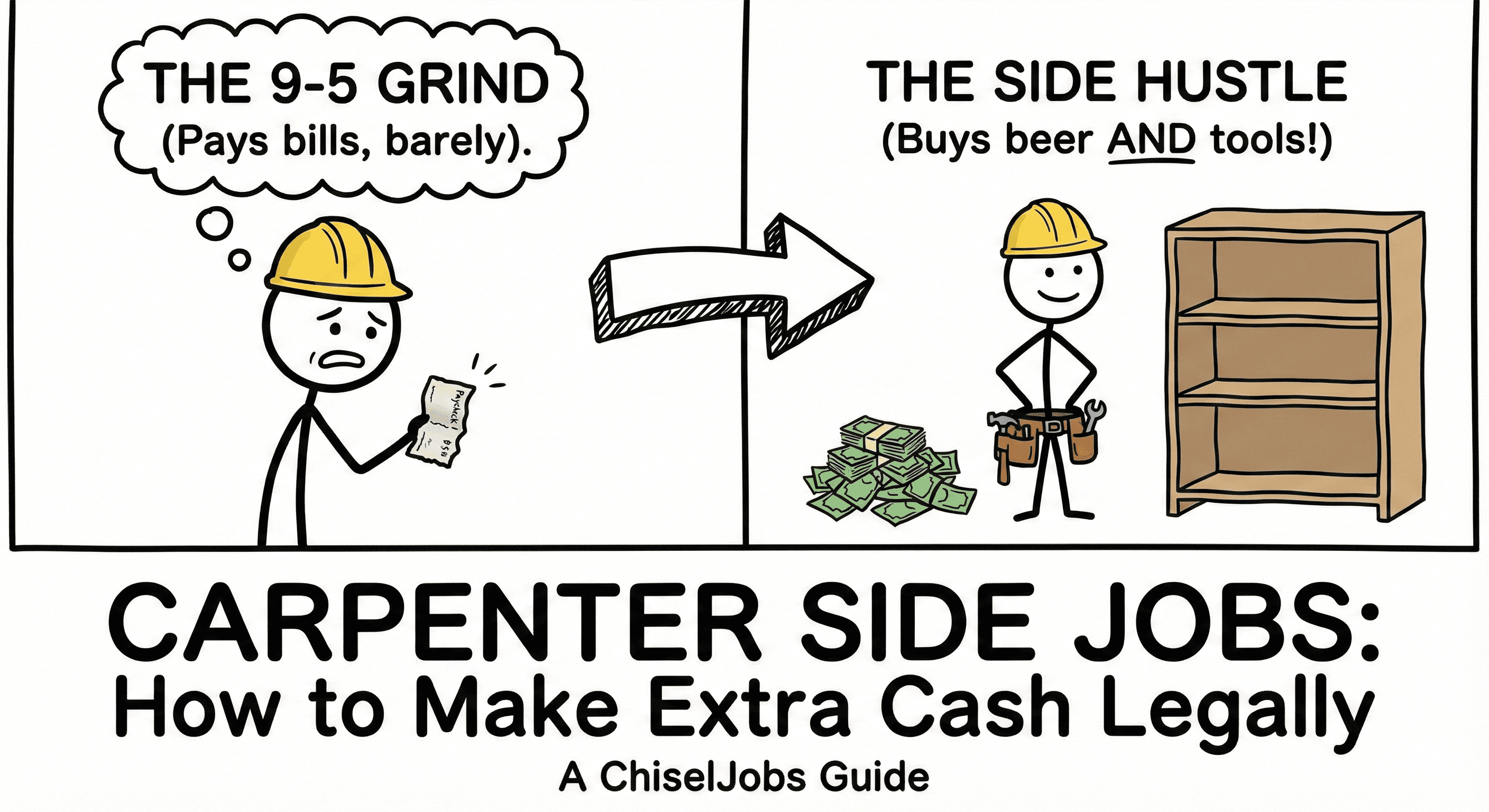
You already have the skills. You have the tools. You likely have a network of people who know you work with your hands. In the current economic climate, relying solely on a 40-hour paycheck from a general contractor or framing crew isn't always enough. For many skilled tradespeople, the answer lies in the "side hustle", independent projects taken on during evenings or weekends.
But there is a massive difference between doing a favor for a neighbor and running a legitimate, profitable side operation. One buys you beer; the other builds wealth.
This guide serves as your central hub for understanding the landscape of carpentry side jobs. We aren't just talking about easy cash. We are talking about leveraging your trade knowledge—from framing to finish work, to build a secondary income stream that is legal, insured, and scalable.
The Reality of the Modern Trades Economy
The demand for skilled labor in North America currently outpaces supply. Homeowners are waiting months for contractors to return calls for small jobs. This is your market gap. Big construction firms cannot afford to send a crew to fix a single rotting deck post or install a crown molding in a powder room. The overhead is too high.
That is where you come in.
As an apprentice or journeyman, you possess the technical know-how to fill this void. You can offer to finish carpentry, rot repair, or custom furniture builds at a price point that makes sense for the homeowner but still yields you $50 to $100 per hour—far more than your standard hourly wage.
However, moving from employee to independent operator requires a shift in mindset. You are no longer just a carpenter; you are a business owner, even if it is just for eight hours on a Saturday.
The Legal Framework: Protecting Your Tools and Your Time
Before we look at specific projects, we must address the "Legally" part of this guide’s title. Working under the table works until it doesn't. A circular saw kickback or a ladder fall on a side job can end your career instantly. If you are not insured, you are risking your personal assets.
Insurance Is Not Optional
If you take money for a service, you have liability. If you drop a hammer through a client's glass coffee table or, worse, hit a water pipe behind a wall, you are responsible.
General Liability Insurance: This is the baseline. It covers damage you cause to a client's property.
Worker’s Compensation: If you hire a helper, this is non-negotiable in most states and provinces.
Tool Insurance: Your employer’s insurance likely does not cover your tools when they are off the company job site.
The Permit Question
Knowing when to pull a permit distinguishes a professional from a hack. Structural changes—removing load-bearing walls, altering stair stringers, or building decks above a certain height—usually require permits. Sticking to "cosmetic" work like trim, cabinetry, and flooring often keeps you in the clear, but always check local building codes.
High-Demand Niches for Carpentry Side Work
Carpentry is too broad to target everyone. The most successful side hustles specialize. Below are the primary categories where we see the highest demand and the best margins. We will be diving deeper into each of these in future guides, but here is the landscape.

1. The "Small Job" Specialist
This is the most immediate entry point. You target the jobs that general contractors ignore.
Rot Repair: Fixing window sills, door jambs, and exterior trim. This requires knowledge of water management and flashing—tricks of the trade that many handymen lack.
Deck and Fence Maintenance: Replacing warped deck boards, securing loose railings, or replacing fence pickets.
Door Installation: Hanging a slab door correctly takes skill. Homeowners struggle with reveals and latch alignment. You can do three on a Saturday.
2. Custom Woodworking & Furniture
If you have a shop space (garage or basement), you can disconnect your income from your travel time.
Built-in Shelving: Homeowners love the look of custom alcove shelves or mudroom benches.
Custom Tables: Farmhouse tables and live-edge desks remain high-demand items.
Pet Furniture: High-end cat trees or "catio" enclosures are a surprisingly lucrative niche.
Read the full guide: Pricing Guide: How Much to Charge for Cabinetry Side Jobs
3. Finish Carpentry Upgrades
This is often the highest hourly rate because it is perceived as "luxury" work.
Crown Molding & Baseboard: Running 500 feet of finish carpentry trim is a day's work for a pro but a month's nightmare for a DIYer.
Wainscoting and Ship Lap: Architectural wall details add massive value to a home and require precise layout skills.
Cabinet Installation: Installing pre-fab cabinets for a laundry room or garage.
Leveraging Your Toolkit
You likely have your belt setup: hammer, tape, speed square, chalk line, chisels, and cat's paw. But side jobs often require the tools your boss usually provides.
To operate independently, your tool acquisition strategy should focus on versatility.

Cordless Ecosystem: You cannot rely on client power. A robust battery platform for your circular saw, reciprocating saw, and oscillating multi-tool is vital.
Portable Table Saw: Essential for ripping filler strips or flooring.
Finish Nailers: A 16-gauge or 18-gauge brad nailer is the bread and butter of interior side work.
Dust Management: This is what separates pros from amateurs. If you leave a client's house covered in sawdust, you will not get a referral. Invest in a portable vac and keep the workspace clean.
Pricing Your Work: The Trap of the Hourly Rate
Novice side-hustlers often underbid by charging their "day job" hourly rate. If you make $30/hour on payroll, charging $30/hour on the side means you are losing money.

You must account for:
Unbillable Time: Driving to the hardware store, quoting the job, and invoicing.
Wear and Tear: Your blades get dull. Your batteries die. Your truck burns gas.
Taxes: The government will want its share. Review the IRS Self-Employed Center (U.S.) or CRA Business Income (Canada) guidelines to understand your obligations
The Fix: Estimate the job by the project, not the hour. Learn to price flat-rate jobs by calculating how long it should take, multiplying by a target rate (e.g., $75-$100/hr), adding 20% for the unexpected, and adding materials. Quote the total number. This protects you if you work slower than expected and rewards you if you work faster.
Marketing: You Are the Brand
You do not need a website to start, but you do need a reputation.

The Portfolio: Take clear, well-lit photos of every project. Before and after shots of a rot repair or a new deck railing are powerful marketing assets.
Word of Mouth: Tell suppliers at the lumberyard you are taking on small projects. Tell other tradespeople (plumbers and sparkies often get asked if they know a carpenter).
Next door and Local Groups: These platforms are goldmines for hyper-local work. A single post saying "Local Union Carpenter available for small weekend projects" can fill your schedule for a month.
Balancing Safety and Fatigue
The biggest risk in side hustle is burnout. Working 40 hours framing a house and then another 16 hours on the weekend building a deck takes a toll on the body. Fatigue leads to mistakes, and mistakes with power tools lead to the ER.

Know Your Limits: Do not take on heavy structural work alone.
PPE: Safety rules apply to you even when you are your own boss. Refer to the OSHA Construction Pocket Guide or Canada's CCOHS Standards to stay compliant.
Schedule Rest: You cannot grind 7 days a week forever. Use side income to buy better tools that make the work faster, not just to buy more toys.
Building Your Future
Side hustle is often the testing ground for a full-time business. Many successful general contracting firms started as carpenters doing weekend jobs. It teaches you how to write a business plan, how to manage clients, and how to handle money.
If you are serious about growth, consider studying industry best practices. Resources like the Journal of Light Construction are also excellent for understanding the business side of the trade.
Looking for verified carpentry jobs across the U.S. and Canada? Explore opportunities on ChiselJobs, the job board built for skilled trades.