Carpenter Jobs in Alaska: Premium Pay for Extreme Conditions

ChiselJobs Team
Published on 7/20/2026
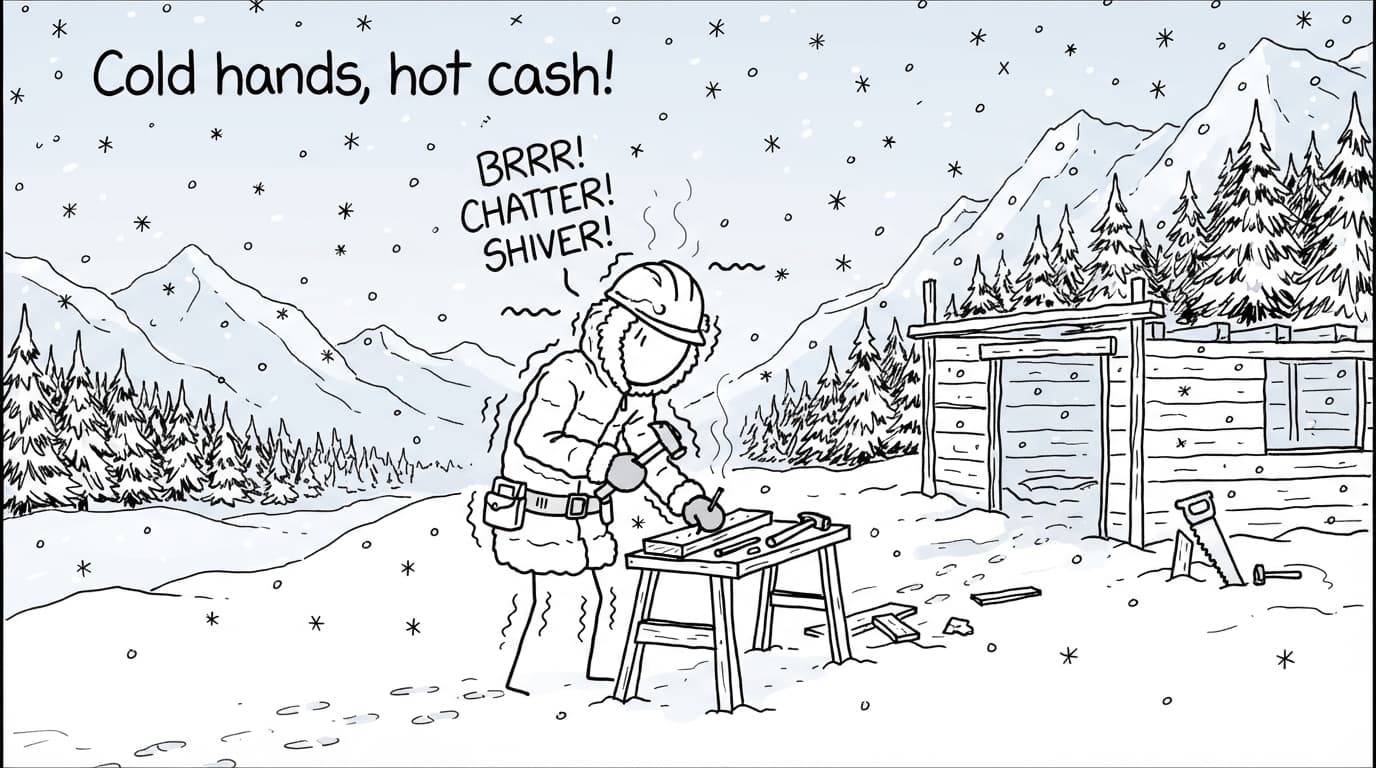
Carpenter jobs in Alaska offer premium pay, often exceeding $35 to $50 per hour, to offset extreme weather and remote locations. According to ChiselJobs industry data, skilled tradespeople specializing in framing, concrete forms, and commercial builds are in high demand across Anchorage, Fairbanks, and remote job sites.
How much money can a carpenter make working in Alaska?
Working in the Last Frontier is highly profitable for skilled tradespeople. Because the construction season is short and the weather is harsh, contractors must pay top dollar to attract and keep reliable workers.
Our team at ChiselJobs has tracked wage trends across North America, and Alaska consistently ranks near the top for hourly rates and overtime opportunities.
What do the earnings look like based on your experience level?
Your paycheck in Alaska depends heavily on your years in the trade and your specific skillset. If you can handle layout work, read blueprints without help, and run a crew, you can write your own ticket.
Experience Level | Hourly Wage Range | Average Annual Salary |
Apprentice (1 to 3 Years) | $22.00 – $28.00 | $45,760 – $58,240 |
Journeyman (4 to 8 Years) | $32.00 – $45.00 | $66,560 – $93,600 |
Lead Carpenter / Foreman | $42.00 – $58.00 | $87,360 – $120,640 |
Are union carpenter jobs better than non-union jobs in Alaska?
Both paths offer good money, but they operate differently.
Union Jobs: The Pacific Northwest Regional Council of Carpenters (which covers Local 1281 in Anchorage and Local 1243 in Fairbanks) sets high standard wages. Union members get excellent health insurance, a strong pension plan, and guaranteed overtime pay.
Non-Union Jobs: Non-union shops often pay similar hourly rates to stay competitive. However, they might not offer the same level of retirement benefits. The upside is that non-union builders can sometimes promote you faster if you show strong work ethic and leadership on site.
How can you increase your income as an Alaskan carpenter?
If you want to maximize your earnings, consider traveling for remote camp jobs. Oil companies and mining operations in places like Prudhoe Bay hire carpenters for maintenance and camp expansion. These jobs often require working two weeks on and two weeks off.
These remote jobs usually provide free lodging, meals, and travel, allowing you to save nearly every dollar you earn.
What does a typical day look like for an Alaskan carpenter?
A carpenter in Alaska does not have an easy office job. You will be on your feet, working outside in rain, snow, and wind. The job requires physical stamina, quick thinking, and a deep respect for safety.
What are the daily duties on an Alaskan job site?
Your tasks will change depending on whether you do rough framing or finish work. However, most residential and commercial projects require a mix of skills:
Reading blueprints and planning the layout for walls, roofs, and foundations.
Cutting materials accurately using a circular saw, hand saws, and miter saws.
Assembling wooden structures, floor joists, and rafters using nail guns and framing hammers.
Checking your work constantly with levels, plumb bobs, and squares to ensure everything is straight and true.
Installing exterior sheeting, vapor barriers, and specialized insulation to protect buildings from extreme cold.
Fitting doors, windows, and exterior trim to seal the building envelope.
What specific tools and skills do you need to survive the job?
To succeed in Alaska, you must be proficient with standard hand and power tools. You also need to know how to maintain them in freezing temperatures.
Hand Tools: You must own a high-quality tool belt, a heavy-duty framing hammer, sharp chisels, a reliable tape measure, and speed squares.
Power Tools: You will regularly use cordless drills, impact drivers, reciprocating saws, and pneumatic nail guns.
Cold-Weather Tool Care: Lithium-ion batteries lose charge quickly in sub-zero temperatures. Experienced Alaskan carpenters keep their spare batteries in a heated job box or inside their jackets close to their body heat.
Which Alaskan cities have the highest demand for carpenters?
While construction happens all over the state, the highest concentration of jobs is in the major population centers and industrial hubs.
Anchorage: As the largest city in the state, Anchorage has constant demand for residential remodeling and commercial building. Because the area is prone to earthquakes, carpenters here must strictly follow structural building codes, using heavy-duty Simpson ties and specific nailing patterns.
Fairbanks: Located in the interior, Fairbanks experiences some of the coldest winters in North America. Carpenters here specialize in super-insulated wall systems, such as double-stud framing, to keep heat inside homes. Military base expansions also drive a lot of work in this region.
Juneau and Southeast Alaska: This region is a temperate rainforest. Carpenters here must be experts in moisture management, flashing details, and rot-resistant wood species like cedar.
How do you get licensed and started as a carpenter in Alaska?
You do not need a college degree to become a carpenter, but you do need proper training and the right legal credentials.
To work as an independent contractor in Alaska, you must obtain a license through the Alaska Department of Commerce, Community, and Economic Development.
What are the steps to get licensed?
Work under a licensed builder: Most carpenters start as helpers or apprentices to learn the trade and log their hours.
Take the Alaska residential contractor course: If you want to build homes, you must complete an 16-hour cold-climate homebuilding course. This course teaches you how to construct homes that can withstand extreme northern weather.
Pass the exam and buy insurance: You must pass a business and law exam, buy general liability insurance, and obtain a surety bond to protect your clients.
Why is safety training so important in the North?
Safety is not optional in Alaska. OSHA regulations are strictly enforced because a simple mistake in freezing weather can be life-threatening.
Many employers require you to have an OSHA 10-hour card before you step onto a job site. You must know how to prevent slips on icy scaffolding, recognize the signs of frostbite, and handle heavy materials safely when wind gusts are high.
What are the biggest challenges of building in extreme cold environments?
Building in Alaska is different than building in the lower 48 states. The ground conditions, material behaviors, and winter darkness create unique challenges that only experienced tradespeople understand.
How do ground conditions affect your daily work?
In many parts of northern Alaska, the ground stays frozen year-round. This is called permafrost.
Standard concrete foundations will crack and shift as the top layer of ground thaws and freezes. Carpenters must learn to build on specialized post-and-pad foundations or tri-odetic steel frames that keep the building elevated off the frozen ground.
How do cold temperatures change your materials?
Wood and metal behave differently when the temperature drops below zero.
Brittle Materials: Vinyl siding, plastic spacers, and even some lumber can crack like glass when cold. You must handle materials gently and use pre-drilling techniques more often to avoid splitting the wood.
Frozen Lumber: Trying to drive a framing nail into frozen larch or spruce is difficult. Your nail guns will require special low-temperature air tool oil to prevent the internal O-rings from freezing and leaking air.
Limited Daylight: In the winter, parts of Alaska only get a few hours of twilight per day. Job sites must be fully lit with heavy-duty LED stand lights, which adds setup time to your morning routine.
If you are a tough, skilled craftsman who enjoys working with your hands, the Alaskan construction industry offers an incredible opportunity to earn high pay while building structures that withstand some of the toughest weather on earth. For the latest job openings and career advice in the skilled trades, keep checking back with ChiselJobs.