Carpenter Jobs in Pittsburgh, PA: Infrastructure Demand

ChiselJobs Team
Published on 10/6/2026
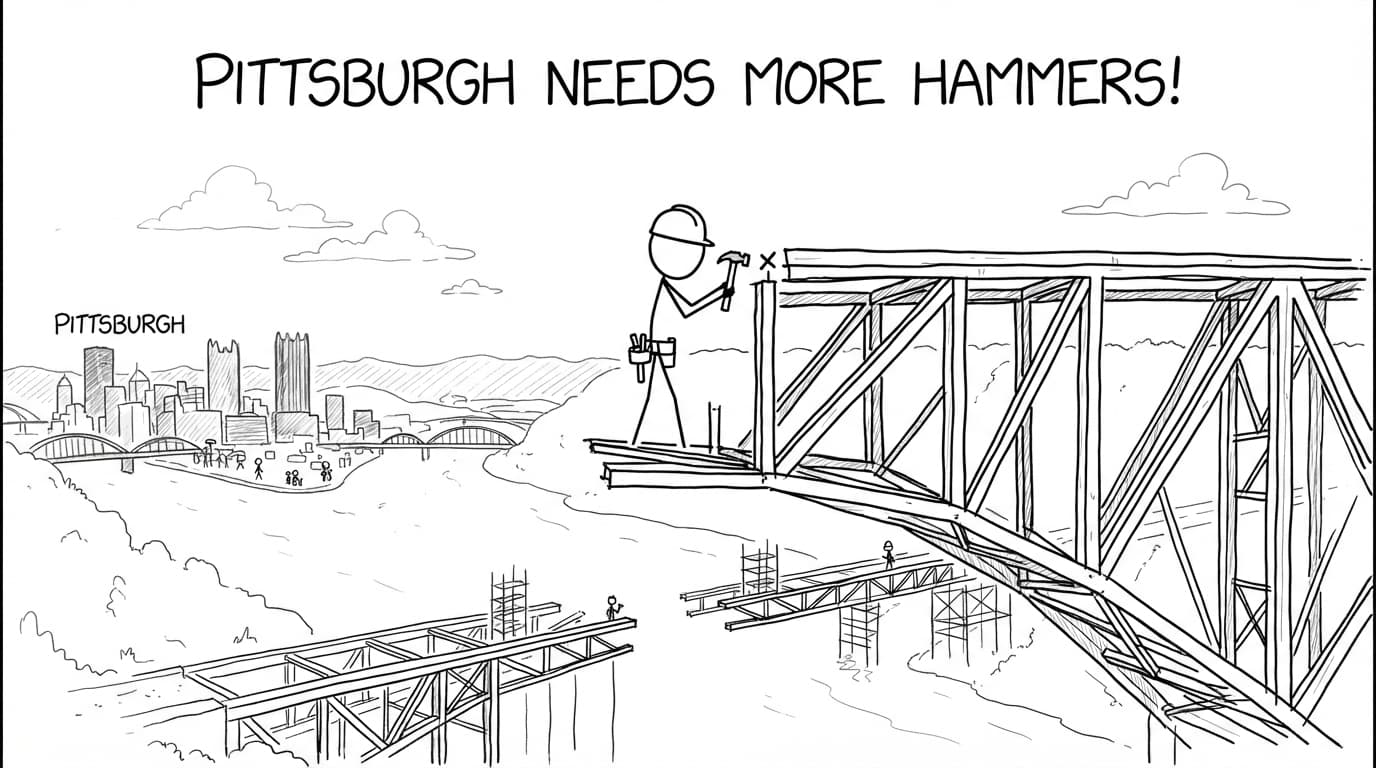
Pittsburgh is experiencing a major infrastructure boom, driving high demand for skilled carpenters in commercial and civil projects. According to ChiselJobs industry data, local carpenters can earn between $24 and $42 per hour depending on experience, union status, and specialized framing or concrete formwork skills.
Why is Pittsburgh seeing a surge in carpenter jobs?
The Steel City is undergoing a massive construction shift. Heavy highway projects, bridge repairs, and major commercial developments are driving the need for skilled labor. The local government and private sectors are pouring billions of dollars into updating the region's older infrastructure. This means steady, long-term work for local tradespeople.
Several key developments are fueling this job growth:
Airport Modernization: The multi-billion-dollar upgrade at Pittsburgh International Airport requires extensive structural framing and interior finish work.
Healthcare and University Expansion: Ongoing projects by UPMC, Allegheny Health Network, and local universities like Pitt and Carnegie Mellon keep commercial contractors busy year-round.
Bridge and Transit Upgrades: Federal funding is directing millions into repairing Western Pennsylvania's aging bridges, creating a massive need for concrete formwork carpenters.
Our tracking at ChiselJobs indicates that commercial and industrial carpentry positions are staying open longer than usual because local contractors cannot find enough qualified hands to keep up with the project pipeline.
What do Pittsburgh carpenters actually do on the job?
Carpenters in the Pittsburgh area work across different specialties, from heavy civil construction to high-end residential remodeling. Depending on your crew and your specialization, your daily tasks will vary.
Structural Framing and Layout
This is the backbone of any new building. Carpenters read blueprints to lay out wall lines, build wood or metal stud framing, and install subfloors and roof trusses. You must be highly accurate with a tape measure and a speed square to ensure the building is square, level, and plumb.
Concrete Formwork
On infrastructure projects like bridges or retaining walls, carpenters build the temporary wooden or metal forms that hold wet concrete in place. This work requires deep knowledge of heavy timber, transit levels, and structural rigging.
Finish Carpentry and Joinery
Once the structure is enclosed, finish carpenters install doors, windows, cabinets, trim, and crown molding. This work demands a high level of precision, sharp chisels, and a steady hand with a miter saw to create tight joints.
Carpentry Specialty | Primary Tasks | Key Tools Used |
Framing Carpenter | Wall layout, structural framing, sheathing, roof truss installation | Circular saw, framing nailer, hammer, level |
Formwork Carpenter | Building concrete molds, shoring, rigging, installing anchor bolts | Sledgehammer, duplex nails, laser level, tie wire |
Finish Carpenter | Trim work, cabinetry, hanging doors, installing molding and hardware | Chisels, finish nail gun, miter saw, block plane |
How much can you earn as a carpenter in Western Pennsylvania?
Carpenters in Pittsburgh earn highly competitive wages compared to the national average, especially when accounting for the relatively low cost of living in Western Pennsylvania.
ChiselJobs has compiled local wage data to help you understand your earning potential in the region:
Experience Level | Hourly Wage Range | Estimated Annual Salary |
Apprentice (1st to 4th Year) | $18.00 – $26.00 | $37,440 – $54,080 |
Journeyman Carpenter | $28.00 – $38.00 | $58,240 – $79,040 |
Lead Carpenter / Foreman | $36.00 – $48.00 | $74,880 – $99,840 |
Wages are heavily influenced by your skill level, your certifications, and whether you work for a union or non-union contractor.
How to boost your earning potential in Pittsburgh
If you want to move to the top end of the pay scale, focus on these steps:
Master Concrete Layout: Read blueprints fluently and learn how to use transit levels and total stations for layout work.
Get Certified: Keep your safety credentials up to date. Employers pay more for workers who can manage safety on site.
Learn Welding: Many heavy commercial carpentry jobs require basic welding certifications for structural steel connections.
How do union and non-union carpentry paths compare in Pittsburgh?
Pittsburgh is a strong union town. The Eastern Atlantic States Regional Council of Carpenters (EAS Carpenters) represents thousands of union workers in the region.
Union Carpentry Career Path
Union jobs offer structured wage increases, excellent health benefits, and a guaranteed pension. As a union apprentice, you spend part of your year in classroom training and the rest earning a paycheck on site. The union negotiated hourly rate for a journeyman in Pittsburgh is among the strongest in the state, often exceeding $35 per hour plus benefits.
Non-Union Carpentry Career Path
Non-union contractors offer different advantages, such as faster hiring processes and more flexible working conditions. If you work for a residential builder or a smaller remodeling contractor, you will likely get a broader range of experience (doing framing, siding, and trim all on the same job) rather than doing one repetitive task on a massive commercial site. Non-union wages are highly competitive right now because contractors must compete with union packages to keep good workers.
What licensing and safety certifications do you need in Pittsburgh?
The state of Pennsylvania does not require a statewide license for individual carpenters. However, there are local municipal rules and safety standards you must follow to work on commercial and infrastructure sites.
OSHA Safety Compliance
Safety is the absolute priority on modern job sites. To work on any commercial or infrastructure project in Pittsburgh, you will need at least your OSHA 10-Hour Construction Safety card. Lead carpenters and foremen are usually required to have an OSHA 30-Hour certification.
These courses cover critical safety topics:
Fall protection and scaffolding safety
Personal protective equipment (PPE) requirements
Safe operation of power tools like circular saws and nail guns
Stairway and ladder safety
Municipal Regulations and General Contractor Licenses
If you transition into running your own projects or working as an independent subcontractor in Pittsburgh, you must register with the Pennsylvania Office of Attorney General as a Home Improvement Contractor (HIC). For commercial work within the city limits, you will need to comply with the City of Pittsburgh Department of Permits, Licenses, and Inspections (PLI) guidelines.
How can you land the best carpentry jobs in the Pittsburgh area?
Finding the right job means knowing where to look and how to showcase your skills.
Highlight Your Tool Proficiency
When applying for jobs on ChiselJobs, make sure your resume lists the specific tools you own and operate. Contractors want to know if you are proficient with a circular saw, pneumatic nail guns, and precision joinery tools.
Show Off Your Best Projects
Take clean, clear photos of your work. A quick photo of a perfectly plumb wall layout, a complex roof framing job, or a flawless run of crown molding proves your skill better than any resume bullet point ever could.
Use Dedicated Trade Job Boards
Avoid general job boards that get flooded with unrelated postings. Instead, use trade-focused platforms like ChiselJobs to connect directly with Pittsburgh area contractors who are actively hiring framing, concrete formwork, and finish carpenters for immediate starts on major local projects.